When we planned a last-minute trip to northern Alabama, our original goal was simple: visit Ivy Green, the birthplace of Helen Keller. But as soon as we started exploring, we realized the Shoals—this collection of towns along the Tennessee River—was full of surprises. From historic landmarks and quirky local sites to musical milestones, there’s so much more here than we expected.
Even in just a weekend, the Shoals felt alive with history and culture. A walk down a quiet street could lead to something unforgettable, whether it’s a centuries-old Native American mound, a coon dog cemetery unlike anywhere else, or a home designed by Frank Lloyd Wright. Each stop offered a glimpse into the people, stories, and creativity that shaped this region.
History of the Shoals
This region in the northwestern corner of the state is known as the Shoals, a collection of towns that sit along the banks of the Tennessee River. In 2009, the area was designated the Muscle Shoals National Heritage Area after years of local communities highlighting the cultural and historical importance of the region.
Because of its location along the river, the Shoals has long been a significant place in American history. Native American tribes once used the river and surrounding lands as important travel and trade routes. Later, when settlers arrived, the area became a strategic connection point to the Mississippi River and the growing transportation networks of the young nation. During the Great Depression, the creation of the Tennessee Valley Authority brought industry, electricity, and new jobs to the region. By the 1960s, the Shoals had transformed yet again—this time into a legendary music hub where countless artists recorded some of their most famous songs.
Today, the Shoals reflects this layered past with an incredible mix of history and culture. What began as a simple trip to visit the home of Helen Keller quickly turned into the discovery of a place filled with stories, landmarks, and a few unexpected surprises.

Historic Sites Around the Shoals
The Shoals is full of history, culture, and unexpected gems just waiting to be explored. From Native American sites to quirky local landmarks and musical milestones, each stop tells a story about this fascinating corner of Alabama. Here’s a look at some of the places we visited that make the Shoals so special.
Florence Indian Mound
One of the most fascinating layers of history in the Shoals centers around the Native American tribes who lived along the Tennessee River. Archaeologists believe people first settled in this area nearly 2,000 years ago. At the Florence Indian Mound and Museum, visitors can still see one of the most visible reminders of that early history.
The large earthen mound was built by Native peoples of the Woodland period and is believed to have served as an important ceremonial and gathering place. Standing at the base of the mound, it’s impressive to think about the generations of people who once gathered here.
A staircase now leads visitors to the top of the mound, and as you climb, there’s a quiet sense of reverence for the people who created it so long ago. From the top, you can take in the surrounding landscape and imagine what this area might have looked like centuries ago.
Next to the mound, a small museum provides more insight into the cultures that lived in the region. Exhibits explain the history and significance of the mound and share artifacts that help tell the story of the people who once called this place home.

Key Underwood Coon Dog Memorial Graveyard
A little ways outside the center of town sits one of the most unusual places in the Shoals: the Coon Dog Cemetery. It is the only cemetery in the world devoted entirely to coon dogs.

Our own beloved coon dog, Scout, is turning eleven this year, so visiting this place felt especially meaningful. Walking through the cemetery was a tender experience as we saw the love so many people have had for their dogs.


The cemetery was first established in 1937, when a coonhound named Troop was buried here by his human family. Since then, hundreds of coonhounds have been laid to rest in this quiet spot in the woods. The memorials and headstones range from simple stones to elaborate markers, each one honoring a loyal hunting companion.

As we wandered through the rows, we loved reading the clever names given to these dogs. What stood out most was how carefully each grave was tended, just as you might see in any human cemetery. Pets have a way of leaving lasting marks on our hearts, and this place is a touching reminder of the bond people share with the dogs who walk beside them.


Pope’s Tavern
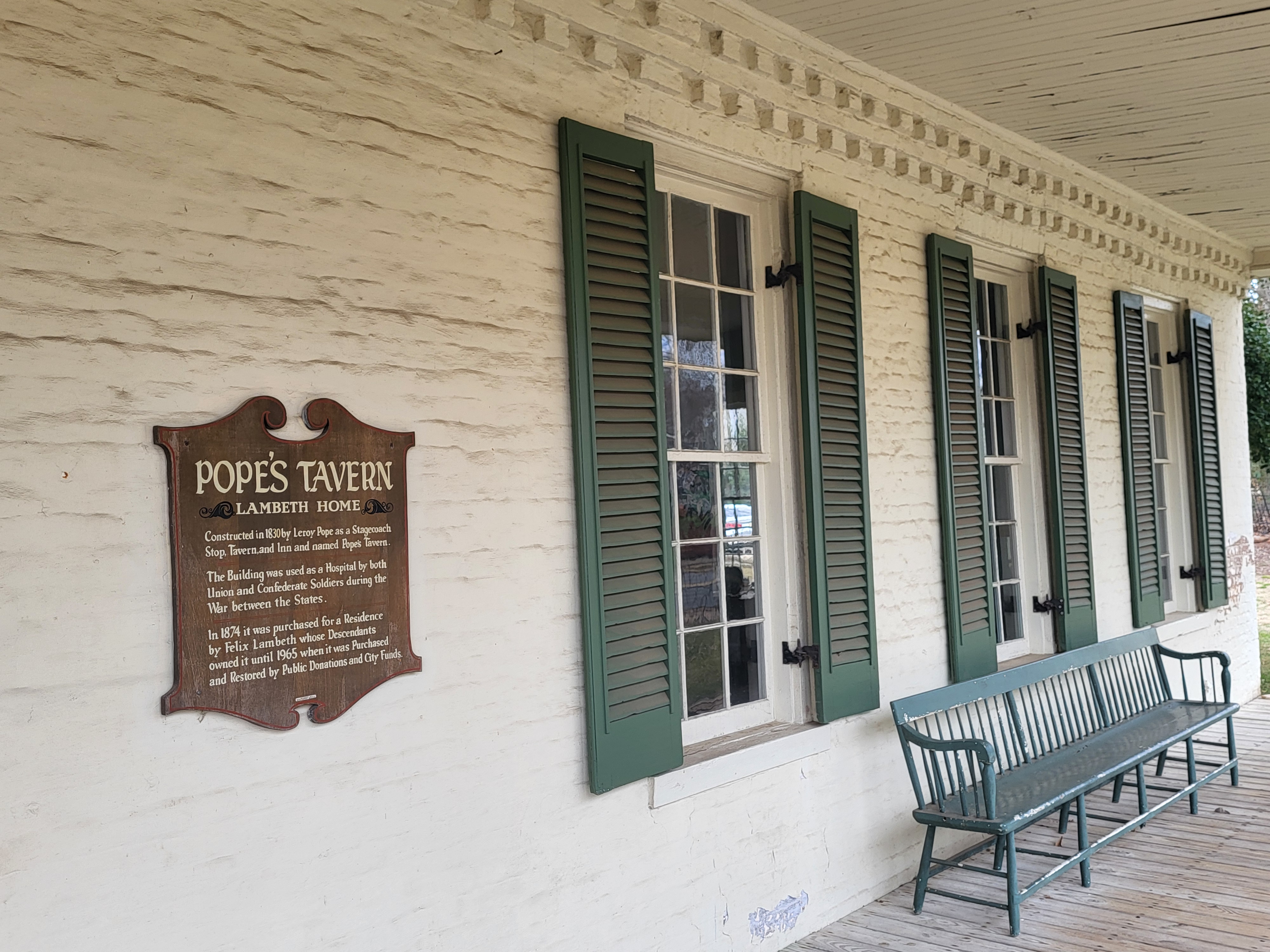
We also visited one of the Shoals’ most interesting landmarks: Pope’s Tavern. The name itself is a bit of an oddity. It was never actually a tavern, and no one named Pope ever lived here. But quirks aside, this historic building offers a fascinating glimpse into the history of the area.

Originally built in the early 1800s, the structure served as a stagecoach stop, welcoming travelers making the long journey from the East Coast as they headed west. During the Civil War, the building took on a very different role and was used as a hospital. At first it treated only Confederate soldiers, but eventually its doors were opened to wounded soldiers from both sides. It became one of the few hospitals where Union and Confederate soldiers were cared for side by side.


After the war, the building was converted into a private residence for a prominent local family. Years later, when an old cistern was discovered in the backyard, archaeologists began investigating the site. Their work uncovered artifacts dating back thousands of years, revealing that this land had been used long before the tavern was ever built.

Today, Pope’s Tavern operates both as a small museum and an active archaeological site, offering visitors a layered look at the many chapters of history that have unfolded here in the Shoals.


Ivy Green- Birthplace of Helen Keller
The most well-known site in the Shoals is Ivy Green, the birthplace of Helen Keller. Helen was just 19 months old when an illness left her both blind and deaf, cutting her off from the world around her and making communication nearly impossible.

Through the patient guidance of her teacher and lifelong friend, Anne Sullivan, Helen learned to connect with her surroundings, unlocking the ability to communicate and explore the world. She went on to achieve remarkable things, becoming one of the most influential figures of her time. Her life remains a powerful example of determination, resilience, and living fully despite limitations.
Visiting Ivy Green gives a unique glimpse into the early life of a truly extraordinary woman and reminds visitors of the enduring impact of courage and perseverance.


Frank Lloyd Wright- Rosenbaum House
Another remarkable site in the Shoals is the Rosenbaum House, designed by the legendary architect Frank Lloyd Wright. Wright created this home for Stanley and Mildred Rosenbaum, applying his signature architectural vision to craft a unique and timeless residence.

The Rosenbaum House is the only Frank Lloyd Wright-designed home in Alabama, making it a must-see for architecture enthusiasts. Wright’s design reflects his “Usonian” style, a concept he developed in the years before World War II to create affordable, functional, and beautiful homes for middle-class Americans. This house is one of only 26 that showcase this pre-war Usonian style, and walking through it offers a rare glimpse into Wright’s innovative approach to space, light, and form.


Music Hall of Fame
Our final stop of the weekend was the Alabama Music Hall of Fame. At first, you might not expect this corner of Alabama to hold such a rich musical history, but the Shoals have been home to legends like Nat King Cole, Hank Williams, and Lionel Richie.
This area is also closely tied to Sam Phillips, often called the Father of Rock and Roll. Phillips went on to create Sun Records in Memphis, where many iconic artists got their start in the recording industry. Walking through the museum, it was fascinating to see the exhibits, hear the stories, and discover how deeply Alabama influenced the course of American music. The connection between the Shoals and these musical greats makes the hall a must-visit for music lovers and history buffs alike.

Each of these sites offers a glimpse into a different chapter of the Shoals’ story—Native American culture, quirky local traditions, historic architecture, and musical legends. Taken together, they show why this corner of Alabama is so rich in history and culture, and why exploring it feels like stepping into a story that has been unfolding for centuries.
Why the History of the Shoals is so Unique
What makes the Shoals truly special is the incredible layering of history and culture in such a small area. From the Native Americans who built the Florence Indian Mound nearly 2,000 years ago, to the early settlers navigating the Tennessee River, every generation has left its mark. The Civil War brought moments of conflict and compassion, as seen at Pope’s Tavern, and the 20th century transformed the region into a hub of industry and innovation with the Tennessee Valley Authority.
Then there’s the music—the Shoals helped launch the careers of Nat King Cole, Hank Williams, and Lionel Richie, while Sam Phillips’ early recording work here influenced the rise of rock and roll. Architecture, too, adds another layer with the Rosenbaum House, the state’s only Frank Lloyd Wright home, blending design, function, and history. Even offbeat sites like the Coon Dog Cemetery add a touch of local character and heart, reminding visitors that history here isn’t just famous—it’s lived, quirky, and deeply human.
Spending a weekend exploring the Shoals is like walking through a living history book, where every turn offers something new to discover. From the early Native American sites and Civil War-era landmarks to the homes of musical legends and the streets full of unique stories, this corner of Alabama is layered with culture, creativity, and heart. It’s a place where history meets music, architecture, and the unexpected.
By the end of our weekend in the Shoals, it was clear why this area is so unique. Each stop—whether historic, musical, architectural, or just delightfully quirky—tells a story about the people and culture that shaped this corner of Alabama. Walking through the streets, visiting the landmarks, and discovering the hidden gems made history feel alive and accessible. The Shoals isn’t just a place to check off a list; it’s a place to explore, reflect, and enjoy the unexpected adventures that await around every turn.
Interested in more underrated cities? Then you may be interested in these:
Thanks for coming along today on this visit around the Alabama Shoals. May you go on to make a name for yourself yet never forget where you come from.

Upcoming Destination:
For More Information:
Read More From:
Follow along for more adventures near and far!


Leave a Reply