There is something special about visiting a national park when the seasons are changing. The landscape feels like it is in the middle of a transformation—summer slowly giving way to crisp autumn days, green forests beginning to turn gold and orange, and familiar places taking on an entirely new feeling.
That is exactly what we found when we visited Cuyahoga Valley National Park in Ohio.
Before this trip, I don’t think Ohio was a state many people would have considered a destination for outdoor adventures. But the more we explored, the more we realized how underrated this state truly is. Beyond the cities and farmland are beautiful landscapes, hidden waterfalls, historic communities, and natural areas that deserve far more attention.
Tucked between Cleveland and Akron, Cuyahoga Valley National Park is a perfect example of an unexpected national park. Instead of towering mountains or vast wilderness, this park protects a beautiful river valley filled with rolling hills, forests, waterfalls, historic structures, and trails that have drawn visitors for generations.
People have been drawn to this area for hundreds of years, first because of the natural resources of the Cuyahoga River valley and later because of the peaceful beauty found throughout the landscape. Today, the park offers visitors the chance to step away from the surrounding cities and reconnect with nature.
With only one day to explore, we knew we would only get a glimpse of everything Cuyahoga Valley National Park has to offer. We packed our day full of scenic overlooks, historic sites, waterfalls, and trails, hoping to experience as much of this unique park as possible.
We arrived just as summer was giving way to fall, when the first hints of color were appearing throughout the valley. It was the perfect kind of autumn day—the kind where the air feels different, the scenery feels brighter, and the beauty of the changing season seems to fill your soul.
Cuyahoga Valley National Park
- History of Cuyahoga Valley
- Boston Mill Visitor Center: the Heart of Cuyahoga Valley National Park
- Hiking Along the Buckeye Trail
- Exploring the Ledges
- Visiting the Everett Covered Bridge
- Brandywine Falls
- Planning Your Visit to Cuyahoga Valley National Park
- FAQ: Cuyahoga Valley National Park
Quick Facts: Cuyahoga Valley National Park
- Location: Northeastern Ohio, between Cleveland and Akron
- Best For: waterfalls, scenic hikes, fall foliage, history, families
- Time Needed: 1 full day (2-3 to explore more)
- Entrance Fee: free
- Favorite Stops: Brandywine Falls, the Ledges, Everett Covered Bridge
- Best Season: fall, though beautiful year-round


History of Cuyahoga Valley
The story of Cuyahoga Valley National Park is different from many of the other national parks across the country. This was not a remote wilderness untouched by people. Instead, it was a landscape shaped by the people who lived around it and eventually fought to preserve it.
By the 1870s, the Cuyahoga Valley had become a popular recreational escape for residents of the nearby cities. As industrial growth expanded throughout northeastern Ohio, people looked to the valley as a place to get away from the noise and demands of city life. Visitors came to enjoy the natural beauty of the area through leisurely boat rides along the river, carriage rides through the countryside, and peaceful days surrounded by forests and farmland.
The arrival of the railway brought even more visitors to the valley, making this beautiful landscape accessible to people throughout the region. What had once been a quiet river valley became a beloved destination for recreation and relaxation.
In 1929, a wealthy businessman named Hayward Kendall established a trust fund dedicated to preserving the area. His generous gift came with the condition that the land would be protected and used permanently for park purposes. Over the following years, additional park infrastructure was developed, much of it with the help of the Civilian Conservation Corps, whose work can still be seen in many historic structures throughout the country.
However, by the 1960s, there were growing concerns about the future of the valley. Expanding cities, pollution, and industrial development threatened the landscape that generations had come to enjoy. There was concern that without protection, the natural beauty of the Cuyahoga Valley could eventually be overwhelmed by the surrounding urban growth.
In December 1974, President Gerald Ford designated the area as Cuyahoga Valley National Recreation Area, helping to preserve this important landscape for future generations.
On October 11, 2000, Cuyahoga Valley was officially redesignated as a national park, becoming the first national park in the United States to begin as a national recreation area before receiving national park status.
Today, Cuyahoga Valley National Park stands as a reminder that preserving America’s special places is not always about protecting untouched wilderness. Sometimes it is about recognizing the beauty that exists alongside our communities and making the choice to protect it before it disappears.


Boston Mill Visitor Center: the Heart of Cuyahoga Valley National Park
We began our day at the Boston Mill Visitor Center, which sits along the banks of the Cuyahoga River and serves as one of the best places to begin exploring the park. The visitor center offers maps, exhibits, and information about the different areas of Cuyahoga Valley, making it a helpful first stop for understanding just how much there is to discover throughout the park.
One of the things that makes Cuyahoga Valley unique is that it did not develop around a single central attraction. Instead, the national park grew around the communities, farms, and historic landscapes that were already part of the valley. The small village of Peninsula sits near the center of the park and has long been connected to the history of the area.
The Cuyahoga Valley Scenic Railroad is another wonderful way to experience the park. The historic passenger train travels through the valley, offering visitors a relaxing way to take in the scenery while learning more about the landscape and its history. Riding along the same valley that once carried goods and people through the region gives a glimpse into how important the river and railway systems were to the development of this area.
Just down the road from the visitor center is another unexpected feature of this national park—a small ski resort. Boston Mills and Brandywine Ski Resorts offer winter recreation within the boundaries of the park, adding yet another layer to the variety of experiences found throughout Cuyahoga Valley.
From waterfalls and hiking trails to historic villages and winter activities, Cuyahoga Valley National Park truly offers something different from many other national parks. The Boston Mill area is a great reminder that this park is not just about preserving nature, but also about preserving the relationship between people and the landscape.

Hiking Along the Buckeye Trail
After exploring the Boston Mill Visitor Center, we crossed the road to spend some time hiking along the Buckeye Trail. Named after Ohio’s state tree, the buckeye, this trail is part of a much larger trail system that circles the entire state. The Buckeye Trail stretches for more than 1,400 miles through Ohio, connecting forests, small towns, parks, and some of the state’s most beautiful landscapes.


The section we explored in Cuyahoga Valley National Park was a peaceful introduction to the beauty of the area. The trail wound through the trees, crossing wooden boardwalks and following sections with steps built into the landscape. At around a mile and a half, this portion of the trail was a moderately easy hike and a great way to experience the quieter side of the park.

As we walked, we began to understand the meaning behind the name Cuyahoga Valley. The word “Cuyahoga” comes from the Indigenous word meaning “crooked river,” a reference to the winding shape of the Cuyahoga River as it travels through the valley before eventually reaching Lake Erie.
The valley has been home to Indigenous peoples for generations, including the Lenape (Delaware) people who have deep connections to this region. The river that shaped this landscape also shaped the lives of the people who lived alongside it, providing transportation, resources, and a connection to the land.

Walking beneath the trees and along the winding trail, it was easy to see why this area has drawn people to it for centuries. Even a short hike through Cuyahoga Valley offers a glimpse into the natural and cultural history that makes this national park so unique.

Exploring the Ledges
After hiking along the Buckeye Trail, we continued on to one of the most unique areas in Cuyahoga Valley National Park—the Ledges.
When we first arrived, the scene looked almost like a community gathering place rather than a dramatic hiking destination. From the parking lot, we walked into a wide-open grassy area where families were enjoying picnics, children were playing, and dogs were happily exploring. It was a peaceful reminder of how accessible and welcoming this national park is for visitors of all ages.
Following the trail around the edge of the grassy area, we began making our way toward the top of the park where the landscape suddenly changed. The open field gave way to towering rock formations and narrow pathways carved between the sandstone ledges.

The trail follows along the ridgeline and rewards hikers with beautiful views overlooking the surrounding Cuyahoga Valley. On a clear day, visitors can see the rolling hills and forests stretching out below, offering a completely different perspective of the park.
But the real highlight of this area is the unique rock formations themselves. The layers of sandstone create natural walls and passageways, with some sections of the ledges just wide enough to squeeze through as you explore. The rocks form a natural barrier along the steep drop beyond the ridge, creating a dramatic landscape that feels surprisingly unexpected in Ohio.


Covered in moss and surrounded by the green of the forest, the sandstone formations were especially beautiful during our fall visit. The combination of the ancient rocks, changing leaves, and peaceful trails made the Ledges one of our favorite stops in Cuyahoga Valley National Park.

Visiting the Everett Covered Bridge
After exploring the Ledges, we continued our day with a leisurely walk to see one of the historic treasures preserved within Cuyahoga Valley National Park—the Everett Covered Bridge.
Ohio was once one of the leading states in the country for covered bridge construction. These wooden bridges were common throughout the mid to late 1800s because the covered design helped protect the wooden beams and extend the life of the structure. As transportation needs changed, however, covered bridges slowly disappeared as steel and concrete bridges became the preferred choice because they were stronger and required less maintenance.

Today, the Everett Covered Bridge is one of the few remaining examples of this piece of Ohio’s transportation history. The bridge crosses Furnace Run, a small stream flowing through the valley, and offers a glimpse into what travel through this area would have looked like more than a century ago.
The bridge’s survival has not come easily. It has been rebuilt twice after suffering significant flood damage. The most devastating flood occurred in 1975 when rising waters lifted the bridge from its foundation and carried it downstream into the water below.

Rather than letting this piece of history disappear, local citizens and government agencies came together to help fund its restoration. Their efforts allowed the bridge to be rebuilt in a historically accurate style, preserving it for future generations to enjoy.
Standing beside the Everett Covered Bridge, it was easy to appreciate the care that has gone into protecting this small piece of the past. Like so many places throughout Cuyahoga Valley National Park, it is a reminder that this landscape is not just about the natural beauty around it—it is also about the stories and communities that have shaped the valley over time.

Brandywine Falls
Our final stop of the day brought us to the most iconic destination in Cuyahoga Valley National Park—Brandywine Falls.
A short walk from the parking area leads visitors along an accessible boardwalk that winds through the forest before gradually descending toward the gorge. As the sound of rushing water grows louder, the trees open up to reveal one of Ohio’s most beautiful waterfalls.

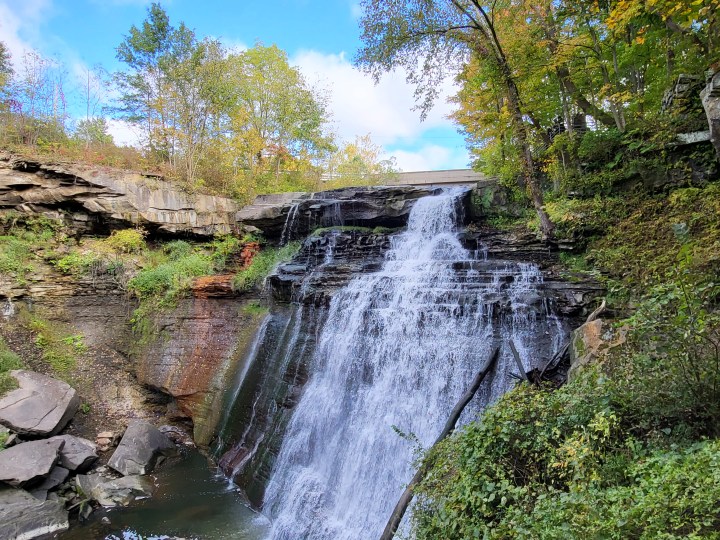
Brandywine Falls plunges 60 feet over layers of shale and sandstone into the Brandywine Gorge below. The observation platform provides an excellent view of the waterfall as it tumbles into the rocky gorge, surrounded by the forest that makes this area especially beautiful during the fall months.
Like many places throughout Cuyahoga Valley, Brandywine Falls is not only a scenic destination but also an important part of the region’s history. During the 1800s, the power of the waterfall helped operate nearby gristmills and wool mills that supported the growing local community. While the mills have long since disappeared, the waterfall continues to draw visitors from around the country to experience its beauty.

After taking in the view from below, the boardwalk loops back up the hillside, offering another perspective of the falls from above before returning to the parking area. It’s a short, easy walk that rewards visitors with some of the most photographed scenery in the park.
We visited just as the first hints of autumn were beginning to appear. Splashes of yellow and orange dotted the trees surrounding the gorge, promising the brilliant display that would arrive only a week or two later. Even before peak fall color, there was something special about standing beside the waterfall and watching the valley quietly prepare for a new season.
Brandywine Falls was the perfect way to end our day in Cuyahoga Valley National Park. Between peaceful forest trails, fascinating history, unique rock formations, a covered bridge, and one of Ohio’s most beautiful waterfalls, we left with a new appreciation for a national park that deserves far more attention than it often receives.

Planning Your Visit to Cuyahoga Valley National Park
One of the things that makes Cuyahoga Valley National Park unique is that it does not feel like a traditional national park. There is no single entrance station, no main road that takes visitors through the entire park, and no one viewpoint that captures everything this area has to offer. Instead, the park is made up of different trails, historic sites, waterfalls, scenic overlooks, and small communities spread throughout the Cuyahoga River Valley.
Location: Cuyahoga Valley National Park is located in northeastern Ohio between Cleveland and Akron, making it one of the most accessible national parks in the country for visitors traveling through the Midwest.
Entrance Fee: There is no entrance fee to visit Cuyahoga Valley National Park.
Best Time to Visit: The park is beautiful year-round, but fall is one of the most popular times to visit as the forests throughout the valley transform into shades of orange, red, and gold. Spring is also a wonderful time to visit for wildflowers and flowing waterfalls, while summer offers warm weather for hiking and exploring the trails.
How Much Time Do You Need?
While you could spend several days exploring all that Cuyahoga Valley has to offer, many of the park’s highlights can be visited in one full day. With more time, visitors can enjoy additional trails, scenic train rides, historic sites, and quieter corners of the park.
Getting Around the Park:
Because Cuyahoga Valley is spread out, visitors will need a vehicle to travel between many of the main attractions. Trails and sites are located throughout the park rather than along one central route, so planning your stops ahead of time will help make the most of your visit.
Visitor Centers:
The Boston Mill Visitor Center is the main visitor center for the park and a great first stop for maps, park information, exhibits, and current trail conditions.
Whether you are stopping by for a few hours or spending an entire weekend exploring, Cuyahoga Valley National Park rewards visitors who slow down and take the time to discover its many different landscapes.

FAQ: Cuyahoga Valley National Park
- Is Cuyahoga Valley National Park worth visiting?
Absolutely! While it doesn’t have the towering mountains or dramatic landscapes of some western national parks, Cuyahoga Valley offers a unique combination of scenic waterfalls, peaceful forests, fascinating history, and easy-to-access hiking trails. It’s an ideal destination for anyone who enjoys exploring nature at a slower pace.
- How much time do you need in Cuyahoga Valley National Park?
You can visit many of the park’s highlights in one full day, including Brandywine Falls, the Ledges, Everett Covered Bridge, and a few of the park’s hiking trails. If you have two or three days, you’ll have time to explore additional trails, ride the Cuyahoga Valley Scenic Railroad, and visit more of the park’s historic sites.
- What is the best time to visit Cuyahoga Valley National Park?
The park is beautiful throughout the year, but fall is one of the most popular seasons thanks to the brilliant autumn foliage. Spring brings rushing waterfalls and wildflowers, summer offers excellent hiking opportunities, and winter transforms the valley into a peaceful snowy landscape.
- Is there an entrance fee for Cuyahoga Valley National Park?
No. Cuyahoga Valley National Park is free to visit, making it one of the most accessible national parks in the United States.
- What are the must-see attractions in Cuyahoga Valley National Park?
Some of the park’s most popular destinations include Brandywine Falls, the Ledges, the Boston Mill Visitor Center, the Buckeye Trail, Everett Covered Bridge, and the Cuyahoga Valley Scenic Railroad.


At first glance, Cuyahoga Valley National Park may seem quieter than many of America’s famous national parks. There are no towering granite peaks or steaming geysers waiting around the next bend. Instead, this is a park that reveals itself one layer at a time.
Each stop throughout the day uncovered another piece of the valley’s story. The winding Buckeye Trail introduced us to the landscape that has drawn people here for centuries. The sandstone ledges revealed the ancient forces that shaped the land. Everett Covered Bridge told the story of the communities that once depended on the valley, while Brandywine Falls reminded us why generations have been inspired by its natural beauty. Together, these layers of geology, history, conservation, and recreation create a national park unlike any other.
As the first hints of autumn spread across the trees, we left with a deeper appreciation not only for Cuyahoga Valley National Park but also for Ohio itself. Sometimes the most memorable places aren’t the ones with the biggest scenery—they’re the ones that slowly reveal their stories as you explore.
If you’re looking for a national park where you can wander wooded trails, stand beside cascading waterfalls, discover hidden pieces of history, and enjoy the beauty of the changing seasons, Cuyahoga Valley National Park is well worth adding to your travel list.
If you love exploring the national parks like I do, then here are some other parks you might be interested in:
Bryce Canyon National Park – Utah
White Sands National Park- New Mexico
Thanks for coming along on this visit to Cuyahoga Valley National Park. May you feel renewed with the cool air and colorful leaves of fall in the park.

Upcoming Destinations:
For More Information:
Read More From:
Follow along for more adventures near and far!


Leave a Reply