On our last day in Germany, we boarded the train and headed out to the resort town of Garmisch-Partenkirchen. We got excited as we passed the snow covered mountains and icy waters of the river. It just doesn’t feel like this time of year without snow.

Garmisch-Partenkirchen use to be two separate towns a short distance from each other. But when the winter Olympics came in 1936 the two towns became one. Because of this joining, there are two different old towns to enjoy. We began in the old town of what use to be Garmisch, the newer half of the duo. We started at the tourist information office where we were given a map of the best route to see all that makes this city such a favorite.


We set off along the suggested route that took us down through the Garmisch old town and turning off to follow the river. The river was slow and peaceful but in no way looked inviting to jump into with the steely blue color that looked as cold as it probably felt. Along the path have been set up collections of rocks and minerals from around Europe with little plaques talking about the rock and where it came from.

The river splits a little ways down the path and visitors can see the mechanisms that they use to gauge how much water goes each way. There was also a small overlook where you can see the split and watch the water rush off in different directions.


The path continued along the river, through lovely neighborhoods, and past covered bridges. Up ahead we could see the slopes up the mountain and my skier husband got really excited. He wished there was a way to go hit the slopes for a couple of hours while we were there, but we had come just before any of them would open for the season.

The winter Olympics were held here in 1936. Later that year, the summer Olympics were held in Berlin. This would be the last time that a country would host the winter and summer Olympics in the same country of the same year. 49 nations competed in these games, which at the time was the highest participation the winter games had seen. Seeing the slopes that were used and the arena where the spectators sat was amazing. The buildings were closed in preparation of the season opening but just to walk around them was interesting.

But these games were controversial because of the number of countries that thought to boycott the games and the number of Jewish athletes that were pressured not to participate due to the rising Nazi regime. But at the request of Hitler, they worked to soften the appearance of the area to encourage people to come to the games. In the end, no country boycotted and everyone came. There was a lot of commentary on the efforts made to welcome people. Sadly, only 12 days after the games closed Hitler sent troops to remilitarize the Rhineland which was the first violation of the Treaty of Versailles and one of the first steps towards WWII.


Had we continued up the path by the river for another mile past the Olympic park, we would have seen the stunning Partnach Gorge in its wintery splendor. This is a favorite hiking trail throughout Bavaria. The gorge was closed to visitors as they too were preparing for the open season. We were disappointed to miss such the natural beauty of the gorge, but chalked it up to coming to Germany in November.

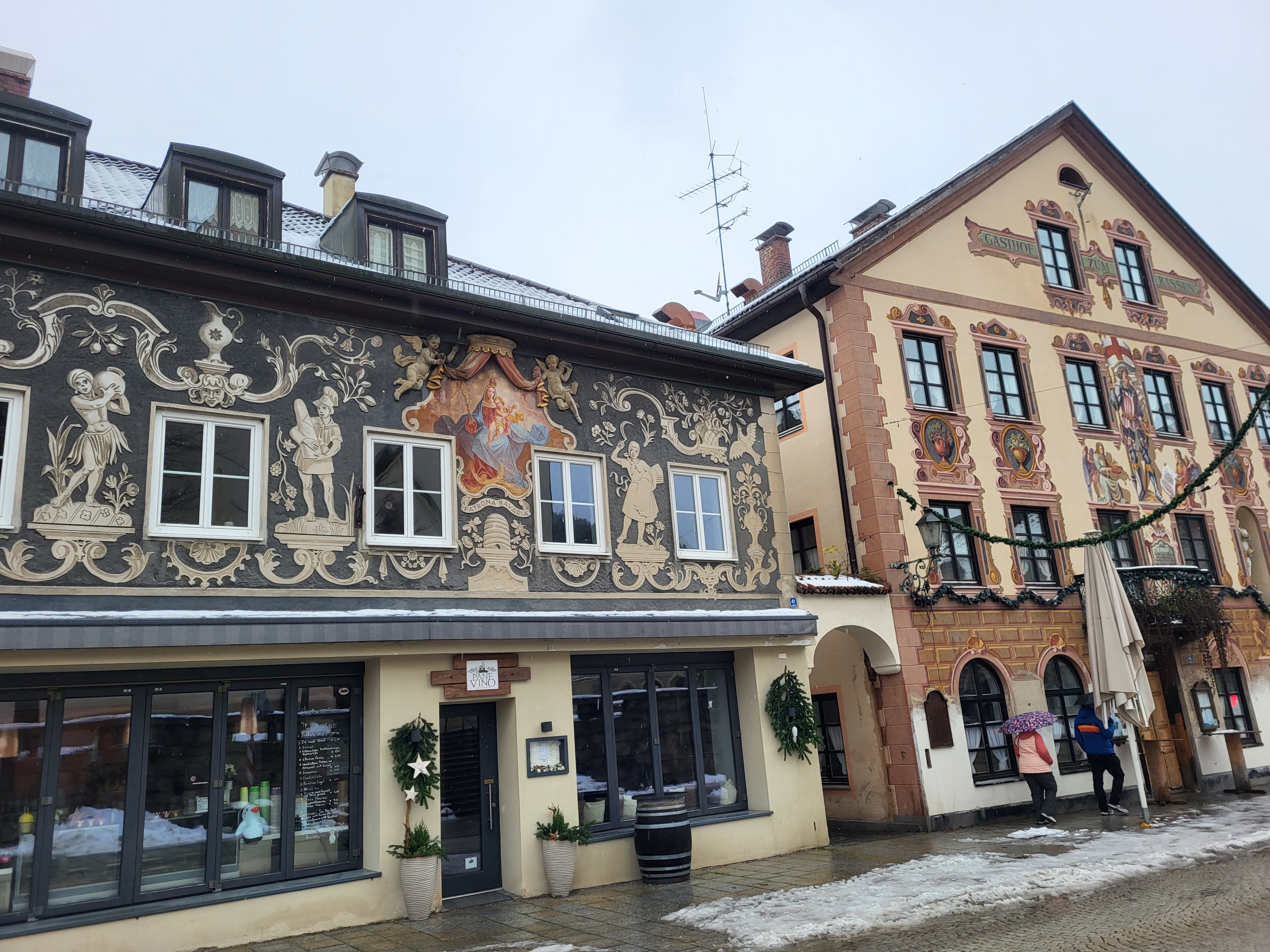
After our walk to Olympic park and almost to the gorge, we walked to the old town of what was Partenkirchen. This older of the old towns is absolutely charming with its colorful buildings and artistic murals painted on the front of them.

These painted houses are called Lüftlmalerei and are an artform all their own. Influenced by the early Christians painting scenes from the bible onto buildings, it then spread to communities where it changed from the biblical to the folk tales and stories of the people. This unique folk art embodies the history, beliefs, and culture of the people of this area and walking down the streets was a great lesson in art history .


A lot of the murals are recreations of what was there due to the damage of fires and time. Many of the paintings are relatively new. In the years following WWII there was a great resurgence of this style and its reminder of the past and a reconnection to the traditions and identity of this area.

A walk through the old town had us in awe at the beautifully painted buildings and the style of the houses. Many of the stories of the paintings and the meanings of their figures have been lost leaving everyone space to create their own story and meaning from what they see. It made the painting all the more tender knowing that what inspired them is a secret they hold in their walls.


We ended up back in the old town of Garmisch where we found a small lovely Christmas market happening in the square. The snow on the trees and the shops and a warm cup of punch in our hands really made it feel like Christmas. What a delight to visit this beautiful city and learn some of its history and admire some of the folk art.


With that, we boarded the train back to Munich to get packed up to go home the next day. Our trip to Austria and Germany had been incredible and we felt a certain ache in leaving it. There is so much more we wanted to see and do, but as with every trip not time enough to do it all. But our time here will always be one of the greatest Christmas gifts we gave to ourselves.
If you love the winter Olympics as much as I do, then you may want to see these other Olympic parks:
Thanks for coming along on this wintery visit to Garmisch-Partenkirchen. May the season be filled with snow and color and holiday cheer.


Leave a Reply