After our drive through Zion National Park, we continued along the scenic route toward our next stop in Utah’s famous “Mighty 5” national parks. Known as the Utah “High 5,” these five parks are some of the most breathtaking landscapes in the United States—and Bryce Canyon National Park has always been one of my personal favorites.
As we approached the park entrance through the famous “hole in the rock” formation, I felt that familiar mix of excitement and anticipation. There’s something about entering Bryce Canyon that feels like stepping into a completely different world.
- History of Bryce Canyon National Park
- The Hoodoos of Bryce Canyon
- Visiting Bryce Canyon in Winter
- Walking the Rim of Bryce Canyon
- Is Bryce Canyon Worth Visiting in Winter?
- Know Before You Go: Bryce Canyon in Winter
Quick Info: Bryce Canyon National Park
- Location: Southern Utah, USA
- Nearest Major Parks: Zion National Park (about 1.5-2 hours)
- Best Known For: Hoodoos (rock spire formations)
- Best Time to Visit: Spring and fall (winters offers snow views but limited trails)
- Time Needed: 1/2 day to 2 days depending on hikes
- Good to Know: Rim trails may be open in winter when inner trails are closed

History of Bryce Canyon National Park
The area around Bryce Canyon was first settled by Mormon pioneers in the 1850s and was named after Ebenezer Bryce, one of the early homesteaders in the region.
It was later designated as a national monument in 1923 by President Warren G. Harding, and in 1928 it was officially established as a national park. In 2023, Bryce Canyon celebrated its 100th anniversary, marking a century of protected natural wonder and exploration.

The Hoodoos of Bryce Canyon
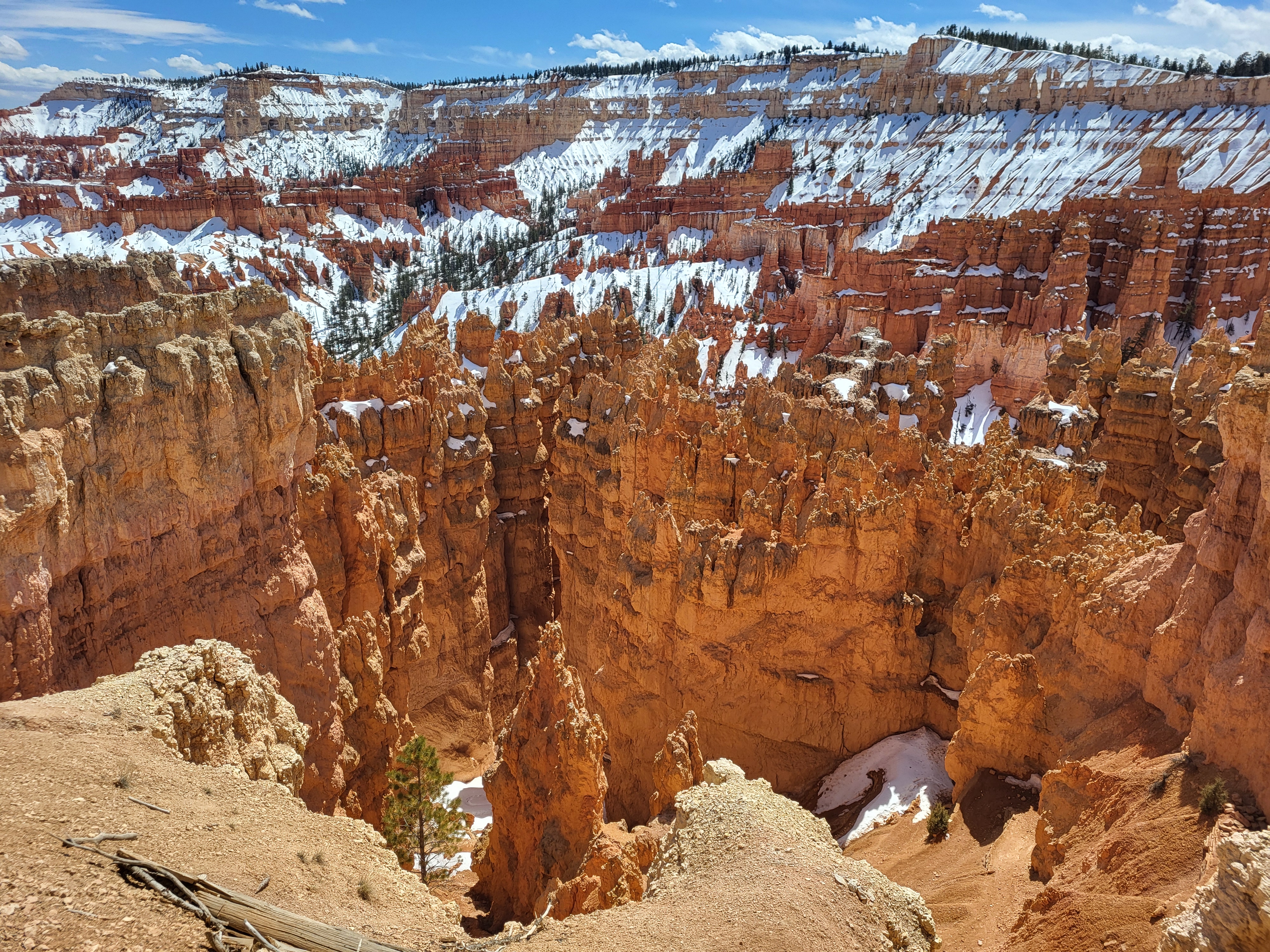
Bryce Canyon is best known for its incredible rock formations called hoodoos—tall, thin spires of rock shaped by erosion, frost, and time.
These formations give the landscape a surreal, almost otherworldly appearance. Standing above them, the canyon feels less like a single valley and more like a vast stone forest stretching into the distance.
Although Bryce Canyon is one of Utah’s most iconic parks, it tends to be less visited than nearby parks like Zion or the Grand Canyon due to its more remote location. But for those willing to make the journey, the reward is unforgettable views and a landscape unlike anywhere else.


Visiting Bryce Canyon in Winter
When we visited, snow still covered much of the park, and most of the trails leading down into the hoodoos were closed for the season. Instead of hiking among the formations, visitors were limited to walking along the rim.
At first, I felt a little disappointed knowing we wouldn’t get to descend into the canyon itself. But the winter landscape offered something different—and unexpectedly beautiful.
The contrast of bright white snow against the deep red rock made the entire canyon feel even more dramatic. From above, the hoodoos looked like they were rising out of a frozen landscape, quiet and still beneath the winter sky.

Walking the Rim of Bryce Canyon
Even without access to the lower trails, the rim views were breathtaking.
We walked slowly along the edge of the canyon, stopping often just to take in the vastness of it all. Snow softened the landscape, quieting the usual textures and making the entire scene feel calm and almost surreal.
As much as I loved seeing Bryce Canyon in winter, I couldn’t help but imagine what it would be like to be down among the hoodoos themselves—walking through the towering formations that make this park so unique.
That experience, being surrounded by those natural stone giants, is one of the things that makes Bryce Canyon so unforgettable.
But in that moment, standing quietly above the canyon, I felt grateful just to be there at all—watching one of my favorite national parks rest under a blanket of snow.
Best Views Along the Bryce Canyon Rim
Some of the most memorable views came simply from walking along the rim. Overlooks like Sunrise Point, Sunset Point, and Inspiration Point offer sweeping views across the canyon and down into the hoodoos below.


Is Bryce Canyon Worth Visiting in Winter?
Yes—Bryce Canyon National Park is absolutely worth visiting in winter, even if your experience looks a little different than it does in the warmer months.
When we visited, snow covered much of the park and many of the trails down into the hoodoos were closed for safety. At first, it felt a bit disappointing knowing we wouldn’t be able to hike among the formations themselves.
But what winter takes away in access, it more than makes up for in atmosphere.
The contrast of bright white snow against the deep red rock creates one of the most striking landscapes I have ever seen. From the rim, the canyon feels quieter, more still, and almost otherworldly as the hoodoos rise through the snow-covered terrain below.
Even without the inner trails, the viewpoints along the rim offer more than enough to take in. You still get the sweeping canyon views, the dramatic rock formations, and the sense of scale that makes Bryce Canyon so unforgettable.
If anything, visiting in winter gave us a different kind of experience—slower, quieter, and more reflective. And while I would still love to return and hike down among the hoodoos someday, I wouldn’t trade the winter views we had that day either.
Know Before You Go: Bryce Canyon in Winter
If you’re planning a winter visit to Bryce Canyon National Park, there are a few important things to keep in mind so you know what to expect once you arrive.
Snow is common and often changes access: Winter weather can close inner canyon trails, even if rim viewpoints remain open. Conditions can shift quickly.
Rim trails are usually your best option: When we visited, most lower trails into the hoodoos were closed, but the rim overlooks were still accessible and offered incredible views.
Check road and weather conditions before you go: Snow and ice can affect driving conditions inside the park, especially early in the morning or after storms.
Wear proper footwear: Even on the rim, walkways can be snowy or icy, so sturdy shoes with traction are helpful.
Dress warmer than you think you need to: The elevation makes Bryce Canyon colder than nearby areas, and wind along the rim can be strong.
Winter light is beautiful for photography: The contrast between snow and red rock creates some of the most dramatic views of the year.
Even with limited trail access, winter can be one of the most peaceful and visually striking times to experience Bryce Canyon.

Bryce Canyon National Park is one of those places that never looks the same twice. Whether in summer light or winter snow, it has a way of making you pause and take in something much larger than yourself.
And even without the trails open that day, it still delivered exactly what it always does—quiet awe, wide-open views, and a reminder of just how incredible the landscapes of the American West truly are.
Want to see more of the Utah Mighty Five? Then you may be interested in these:
Thank you for coming along to the beautiful Bryce Canyon National Park. May you be like the hoodoos and stand tall with power and balance.

Coming Up Next:
For More Information:
Read More From:
Follow along for more adventures near and far!


Leave a Reply