When most people picture America’s national parks, they imagine towering mountains, deep canyons, or steaming geysers. Indiana Dunes National Park offers something entirely different.
Stretching for fifteen miles along the southern shore of Lake Michigan, this surprisingly diverse park is a place where sandy beaches meet towering dunes, quiet forests give way to peaceful wetlands, and one of the world’s largest freshwater lakes stretches to the horizon. It may be one of the country’s newest national parks, but the landscapes it protects have been shaped over thousands of years.
During a Midwest road trip, we made our way to the very northern edge of Indiana to experience this unique national park for ourselves. We found windswept beaches, towering dunes, moody skies over Lake Michigan, and a landscape that completely changed what we expected to find in Indiana. Sometimes the parks that receive the least attention end up being some of the most memorable.
Indiana Dunes National Park
- From National Lakeshore to National Park
- Understanding the National Park & State Park
- First Impressions of Indiana Dunes National Park
- Walking the Shores of Lake Michigan
- More Than Just Sand Dunes
- Visiting Mount Baldy
- Why Visit Indiana Dunes National Park?
- Things to Do in Indiana Dunes National Park
- Planning Your Visit to Indiana Dunes National Park
- FAQ: Indiana Dunes National Park
Quick Facts: Indiana Dunes National Park
- Location: northwest Indiana along the southern shore of Lake Michigan
- Established: National Lakeshore in 1966; redesignated as a National Park in 2019
- Size: approximately 15,000 acres stretching 15 miles along Lake Michigan
- Best For: beaches, hiking, birdwatching, families, and scenic drives
- Time Needed: half day to a full day
From National Lakeshore to National Park
At first glance, Indiana Dunes might seem like an unusual choice for a national park. There are no towering mountains or dramatic waterfalls—just sand dunes, forests, wetlands, and the blue waters of Lake Michigan. But this seemingly simple landscape tells a remarkable story thousands of years in the making.
Long before European settlers arrived, Native American communities lived, hunted, and traveled through this region, taking advantage of the abundant wildlife and natural resources found along the lakeshore. Later, French explorers and fur traders passed through the area as the southern shore of Lake Michigan became an important travel corridor connecting the eastern and western parts of North America.
By the late nineteenth and early twentieth centuries, the dunes faced increasing pressure from industry and development. As nearby cities and factories expanded, conservationists recognized that this unique landscape was disappearing. Scientists were especially interested in the incredible diversity of plants found within such a small area, making the dunes an important place for ecological research.
Years of public advocacy eventually led Congress to establish Indiana Dunes National Lakeshore in 1966, protecting much of the shoreline from further development. More than fifty years later, in 2019, the area was redesignated as Indiana Dunes National Park, becoming the 61st national park in the United States.
Today, visitors come to experience far more than just sandy beaches. Indiana Dunes protects one of the most biologically diverse landscapes in the National Park System, where towering dunes, forests, prairies, marshes, and nearly fifteen miles of Lake Michigan shoreline exist side by side. It serves as a reminder that America’s national parks preserve not only dramatic scenery, but also places of extraordinary ecological importance.

Understanding the National Park & State Park
One of the first things you’ll notice when planning a visit to Indiana Dunes is that there are two parks with nearly identical names.
Indiana Dunes National Park and Indiana Dunes State Park sit side by side along the southern shore of Lake Michigan, but they are managed separately and each has its own entrance fees, facilities, and recreational opportunities.
The National Park is managed by the National Park Service and stretches along approximately fifteen miles of Lake Michigan shoreline. Rather than one continuous property, it consists of several different sections connected by roads and trails. Here you’ll find beaches, wetlands, forests, prairies, historic sites, and scenic overlooks spread throughout the park.
Nestled within the national park is Indiana Dunes State Park, which is managed by the State of Indiana. The state park is home to some of the area’s most popular swimming beaches, hiking trails, and the famous Three Dune Challenge.
Because the two parks operate independently, entrance fees and passes are different. If you’re planning to visit the national park, an America the Beautiful Pass covers admission. If you’re only visiting the state park, you’ll pay the state park entrance fee.
Before beginning your visit, it’s worth stopping at the Indiana Dunes Visitor Center. The rangers can explain the differences between the two parks, recommend trails and beaches based on your interests, and help you decide which areas best fit the amount of time you have available.
For our visit, we focused on exploring the national park. We were curious to experience one of America’s newest national parks and discover the landscapes that earned this unique stretch of Lake Michigan shoreline its national park designation.

First Impressions of Indiana Dunes National Park
After leaving the visitor center, we followed the winding roads through the park toward the shoreline. The drive itself was a surprise. Dense forests lined both sides of the road, making it easy to forget that one of North America’s largest lakes was only minutes away.
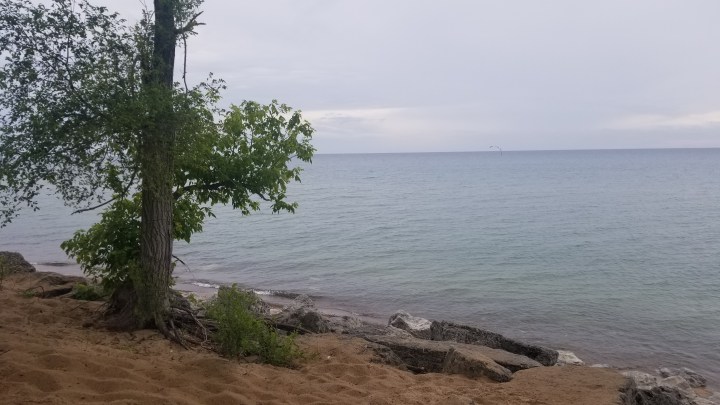
As we turned onto Lakefront Drive, the trees finally opened and we caught our first glimpse of Lake Michigan. Even though we knew we were standing beside a lake, it looked and felt much more like an ocean. The horizon stretched endlessly into the distance, and under the gray skies the water had taken on a beautiful slate-blue color.
It wasn’t the bright sunshine or turquoise water often shown in travel brochures, but I loved the moody atmosphere. The clouds, cool breeze, and rolling waves gave the shoreline a peaceful feeling that seemed to invite us to slow down and simply enjoy the view.

Walking the Shores of Lake Michigan
From the parking area, a sandy path led us through the dunes and onto the beach.
Soft sand stretched beneath our feet while gentle waves rolled onto the shoreline. Standing there, it was hard to believe we were in Indiana. Lake Michigan is so vast that the opposite shore disappears beyond the horizon, giving the impression of standing beside the sea.
On especially clear days, visitors can sometimes make out the skyline of Chicago across the lake. Our visit wasn’t one of those crystal-clear days, but the misty horizon and dramatic clouds created a different kind of beauty that we thoroughly enjoyed.
Although we found a quiet stretch of beach to ourselves for a while, the shoreline was full of life. Families built sandcastles, children splashed in the chilly water, dogs chased waves, and groups gathered for picnics despite the cool weather. The water may have been cold, but it certainly didn’t keep anyone from enjoying the lake.
Indiana Dunes is every bit a beach destination, but unlike many coastal beaches, it combines freshwater swimming with the unique backdrop of towering sand dunes and protected natural landscapes.

More Than Just Sand Dunes
As we continued exploring the park, we quickly realized that Indiana Dunes is far more diverse than its name suggests.
Leaving the beach behind, we drove through quiet stretches of forest before coming upon a large marsh. Skeletal trees rose from the still water while patches of green aquatic plants covered portions of the surface. It felt completely different from the open shoreline we had just left.
That contrast is one of the things that makes Indiana Dunes so remarkable. Within a relatively small park, visitors can experience beaches, forests, wetlands, prairies, rivers, and dunes—all within just a few miles of one another.
It became clear why conservationists fought so hard to protect this landscape. Every turn in the road seemed to reveal another entirely different ecosystem waiting to be explored.

Visiting Mount Baldy
No visit to Indiana Dunes National Park feels complete without stopping to see Mount Baldy.
Rising 126 feet above Lake Michigan, Mount Baldy is the tallest dune in the park and one of its most recognizable landmarks. Unlike many dunes, it is considered a “living” or “wandering” dune, constantly shifting as wind moves the sand across the landscape.
For many years visitors climbed the 302 steps to the summit for sweeping views across Lake Michigan. Today, however, climbing the dune is no longer permitted as the National Park Service works to protect both the fragile ecosystem and visitor safety. The constantly moving sand has created hidden hazards, and restoration efforts are helping stabilize the dune by planting native grasses along its base.
Even viewed from below, Mount Baldy is impressive. Standing at its base gave us a new appreciation for the power of wind and water to shape a landscape over time. It was also a reminder that one of the goals of our national parks is not simply to provide access, but to protect these remarkable places so future generations can experience them as well.

Why Visit Indiana Dunes National Park?
Indiana Dunes National Park may not have the towering peaks of the Rocky Mountains or the dramatic canyons of the Southwest, but that’s exactly what makes it special. Here, the beauty comes from the unexpected.
Within a relatively small area, you can walk along the shores of one of the world’s largest freshwater lakes, climb towering sand dunes, wander through forests and wetlands, and experience one of the most biologically diverse landscapes in the National Park System. It is a park that rewards slowing down and appreciating the quieter side of nature.
Whether you’re making a day trip from Chicago, exploring the Midwest, or working toward visiting every national park, Indiana Dunes offers a unique experience unlike anywhere else in the country.

Things to Do in Indiana Dunes National Park
Relax on the Beaches
The park’s fifteen miles of Lake Michigan shoreline are its biggest draw. Spend time walking the beach, swimming in the lake during warmer months, building sandcastles, or simply enjoying the expansive views across the water.
Visit Mount Baldy
Although climbing the dune is no longer permitted, Mount Baldy remains one of the park’s most recognizable landmarks. Viewing this constantly shifting “living dune” offers an appreciation for the powerful natural forces that continue to shape the landscape.
Explore the Hiking Trails
More than fifty miles of trails wind through forests, wetlands, prairies, and dunes. Whether you’re looking for a short nature walk or a longer hike, there are options for every skill level.
Discover the Park’s Diverse Ecosystems
Indiana Dunes protects much more than sandy beaches. Marshes, oak savannas, forests, rivers, and prairies all exist within the park, making it an excellent destination for nature lovers.
Watch for Wildlife
The park is internationally recognized as an important stop along migratory bird routes. Birdwatchers visit throughout the year hoping to spot some of the hundreds of species that pass through the area.
Stop at the Visitor Center
Before beginning your visit, spend a few minutes at the Indiana Dunes Visitor Center. Rangers can recommend trails, explain the differences between the national park and state park, and help you make the most of your visit.

Planning Your Visit to Indiana Dunes National Park
Best Time to Visit: Late spring through early fall offers the warmest weather for enjoying the beaches and hiking trails, while autumn brings beautiful fall colors. Winter visits are quieter and can offer striking views of Lake Michigan.
Entrance Fees: Indiana Dunes National Park charges an entrance fee, which is covered by the America the Beautiful Pass. Indiana Dunes State Park has separate admission fees.
Time Needed: A half day is enough to enjoy the beaches and a few highlights, while a full day allows time to hike, explore multiple sections of the park, and relax along the shoreline.
What to Bring: Comfortable walking shoes, sunscreen, water, insect repellent during warmer months, and layers. Weather along Lake Michigan can change quickly, and even summer days can be breezy near the water.
Visitor Center: Begin your visit at the Indiana Dunes Visitor Center for maps, current trail conditions, ranger recommendations, and information about both the national park and the neighboring state park.

FAQ: Indiana Dunes National Park
- Is Indiana Dunes National Park worth visiting?
Absolutely. Indiana Dunes offers a unique combination of beaches, forests, wetlands, and towering sand dunes that makes it unlike any other national park.
- How much time do you need at Indiana Dunes National Park?
Plan on at least a half day to visit the beaches and a few scenic areas. A full day allows time to hike trails and explore multiple sections of the park.
- What is the difference between Indiana Dunes National Park and Indiana Dunes State Park?
Although they share the same shoreline, they are managed separately and have different entrance fees, facilities, and recreational opportunities. The national park surrounds the state park, and many visitors choose to explore both.
- Can you climb Mount Baldy?
No. Mount Baldy is currently closed to climbing while the National Park Service works to protect the fragile dune and ensure visitor safety. It can still be viewed from designated areas.
- Can you swim in Lake Michigan?
Yes. Swimming is popular during the warmer months, although visitors should always pay attention to weather conditions, waves, and any posted beach advisories.
- Is Indiana Dunes a good family destination?
Yes. The combination of sandy beaches, easy hiking trails, picnic areas, and opportunities to explore nature makes Indiana Dunes an excellent national park for families with children.

Before our visit, I pictured Indiana Dunes National Park as little more than a stretch of sandy beach along Lake Michigan. What we found was so much more.
From quiet forests and peaceful wetlands to towering sand dunes and miles of shoreline, every stop revealed a different side of the park. Standing on the beach watching the waves roll in, it was easy to forget we were in the Midwest and not along an ocean coast. Then, just a few minutes later, we found ourselves exploring marshes and looking up at one of the park’s famous living dunes.
Indiana Dunes reminded me that not every national park has to be dramatic to be memorable. Sometimes the most rewarding places are the ones that quietly surprise you. They encourage you to slow down, notice the details, and appreciate landscapes that are unlike anywhere else.
If you’re traveling through northern Indiana, exploring the Great Lakes region, or working toward visiting all of America’s national parks, don’t overlook Indiana Dunes. It may be one of the country’s newer and lesser-known parks, but it offers a beautiful reminder that every national park tells its own unique story.
If you enjoyed this visit to one of the lesser known US national parks, then you may also be interested in these:
New River Gorge National Park – West Virginia
Thanks for coming along on this visit to Indiana Dunes National Parks. May your feet be steady in the shifting sands of time.

Coming Up Next:
For More Information:
Read More From:
Follow along for more adventures near and far!


Leave a Reply