When I asked my international students what was at the top of their list for our day trip to Nashville, there was one answer that came back again and again: the Johnny Cash Museum.
It was no surprise. Johnny Cash is one of those rare artists whose music has crossed generations, cultures, and borders. His deep voice, unforgettable songs, and larger-than-life story have made him one of the most influential musicians in American history.
Visiting the Johnny Cash Museum had been on my own Nashville list for years, so I was more than happy to follow their request. What started as a fun day exploring Music City turned into a fascinating look at the life, struggles, faith, and legacy of the Man in Black.
Johnny Cash Museum
- Is the Johnny Cash Museum Worth Visiting?
- Visiting the Johnny Cash Museum
- Know Before Go: Johnny Cash Museum
- FAQ: Johnny Cash Museum
At A Glance: Johnny Cash Museum
- Location: downtown Nashville, Tennessee
- Best For: music lovers, Nashville visitors, and fans of American music history
- Time Needed: about 1-2 hours
- Don’t Miss: Johnny Cash memorabilia, orginal recordings, handwritten lyrics, and personal artifacts


Is the Johnny Cash Museum Worth Visiting?
Absolutely. Even if you are not a lifelong Johnny Cash fan, the museum offers much more than a collection of famous songs and album covers. It tells the story of a man who experienced incredible success, personal struggles, faith, heartbreak, and redemption throughout his life.
The museum showcases Johnny Cash’s journey from a childhood on an Arkansas cotton farm to becoming one of the most recognizable voices in music. It highlights not only his accomplishments but also the experiences that shaped the person behind the music.
For visitors looking to understand why Johnny Cash remains such an important figure in American culture, the museum offers a fascinating and personal glimpse into his life.

Visiting the Johnny Cash Museum
The Johnny Cash Museum is located in the heart of downtown Nashville. The building also houses the Patsy Cline Museum, allowing visitors to explore the stories of two legendary voices in country music.
Admission to the Johnny Cash Museum is separate from the Patsy Cline Museum, which is located upstairs. While I would love to learn more about Patsy Cline another day, this visit was dedicated entirely to the Man in Black.
Walking through the museum feels like stepping through the timeline of Johnny Cash’s life. The exhibits include photographs, costumes, instruments, personal belongings, handwritten notes, and memorabilia from throughout his career.
The Early Years: From Arkansas to the Air Force
Johnny Cash was born J.R. Cash in Arkansas in 1932. He grew up in a poor family of cotton farmers and was the middle child of seven children. Life on the farm was difficult, but music was always part of his world.
His family would sing together while working in the fields, and his mother and a family friend helped teach him to play guitar. By the time he was only 12 years old, Johnny was already writing his own songs and performing on a local radio station.
As a young adult, Cash joined the United States Air Force. Because he was told he could not use his given initials as his official name, he listed himself as John R. Cash. He spent three years stationed in Germany as a Morse code operator before returning home and beginning the next chapter of his life.

Finding His Sound at Sun Records
After returning from the Air Force, Johnny Cash moved to Memphis, where he worked as an appliance salesman while studying to become a radio announcer. In the evenings, he performed music with his small band, the Tennessee Two.
Cash originally approached Sun Records hoping to record gospel music, but producer Sam Phillips was no longer looking for that style. As Cash developed his own rockabilly sound, he eventually signed with the label and began building his career.
One of the museum’s incredible pieces is the original signed copy of “I Walk the Line” from Johnny Cash and Sam Phillips.
The museum also highlights one of the most famous moments in music history: the Million Dollar Quartet. One day at Sun Records, Johnny Cash, Elvis Presley, Carl Perkins, and Jerry Lee Lewis came together for an impromptu jam session that became legendary.

A Career That Changed Music
Johnny Cash’s career continued to grow as he created music that crossed traditional boundaries. He became known not only as a country musician but also as an artist who blended country, rock, gospel, and folk influences.
His connection to June Carter brought together two legendary musical families. June came from the Carter Family, one of the most influential groups in early country music history. Her family participated in the famous 1927 Bristol Sessions, which helped shape the future of country music.
Brad and I visited the Birthplace of Country Music Museum in Bristol a few years ago, and learning about the Carter Family and those early recordings gave me an even greater appreciation for the musical history that surrounded Johnny Cash.
From 1969 to 1971, Johnny Cash hosted The Johnny Cash Show at the Ryman Auditorium in Nashville. The program introduced audiences to a wide range of artists and helped bring many musicians into the spotlight.
Cash also performed multiple times at the White House, became friends with several presidents, and even served as Grand Marshal for the United States Bicentennial Parade.
In 1980, Johnny Cash was inducted into the Country Music Hall of Fame, becoming the youngest inductee at the time. He was later inducted into the Rock and Roll Hall of Fame and the Gospel Music Hall of Fame, proving that his music truly reached beyond one category or audience.

The Faith, Art, and Humanity Behind the Music
The museum also highlights parts of Johnny Cash’s life that go beyond music.
Throughout his career, Cash returned again and again to themes of faith, redemption, hardship, and compassion. His upbringing in gospel music continued to influence him, and many of his songs reflected the struggles and hope found throughout his own life.
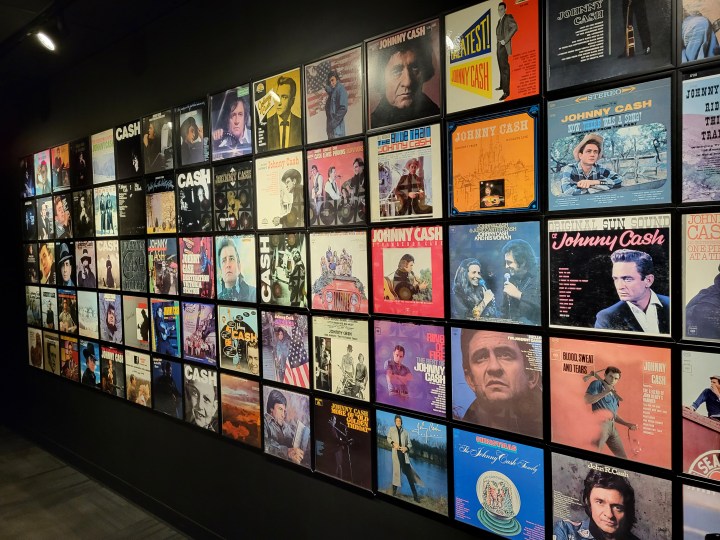
Johnny Cash recorded an incredible 97 albums during his career. The museum displays album covers spanning his decades of music, along with walls filled with gold and platinum records.
He was also an artist in other ways, constantly sketching and creating artwork. One of his sketches, a drawing of the Shroud of Turin, was kept inside his Bible.

The Final Chapter and Lasting Legacy
One of the most powerful moments in the museum comes near the end, where visitors can watch the music video for Johnny Cash’s version of “Hurt.”
Seeing clips from his life while listening to the song is an emotional reminder of everything he experienced—the successes, struggles, losses, and perseverance that defined his journey.
June Carter Cash passed away in 2003 at the age of 73. She encouraged Johnny to continue creating music, and he followed that advice by recording dozens of songs during the final months of his life.
Johnny Cash passed away in September 2003 at the age of 71. While his life included moments of pain and hardship, he continued creating music that connected deeply with people around the world.
The Johnny Cash Museum is more than a collection of memorabilia. It is a tribute to an artist who never stopped evolving and a reminder that behind every song is a story.

Know Before Go: Johnny Cash Museum
- Plan for about 1-2 hours. The museum is filled with information, so give yourself enough time to enjoy the exhibits.
- Located downtown. The museum is within walking distance of many Nashville attractions, restaurants, and music venues.
- Consider combining with other Nashville stops. It pairs well with a day exploring Music City.
- Don’t rush through the exhibits. Many of the most interesting details are found in the personal stories behind the artifacts.
- Music fans will love it. Even visitors who only know a few Johnny Cash songs will likely leave with a greater appreciation for his impact.

FAQ: Johnny Cash Museum
- How long does it take to visit the Johnny Cash Museum?
Most visitors spend about one to two hours exploring the museum. Those who want to read every exhibit and learn more about Johnny Cash’s life may want to allow additional time.
- Is the Johnny Cash Museum worth visiting if you aren’t a huge fan?
Yes. The museum tells the story of Johnny Cash’s life, career, and cultural impact, making it interesting even for visitors who are not familiar with all of his music.
- Where is the Johnny Cash Museum located?
The Johnny Cash Museum is located in downtown Nashville, Tennessee, making it an easy addition to a day exploring Music City.
- Does the Johnny Cash Museum include the Patsy Cline Museum?
No. The two museums share the same building, but they are separate experiences with separate admission.

Visiting the Johnny Cash Museum was a wonderful reminder that music is about more than songs. It is about the stories, struggles, and moments that shape the people who create it.
Johnny Cash experienced rejection, addiction, heartbreak, and hardship, but he continued to create music that reached people around the world. His ability to connect with listeners is what made him more than just a musician—he became a symbol of perseverance, authenticity, and the power of storytelling.
For anyone visiting Nashville, the Johnny Cash Museum is a beautiful tribute to the Man in Black and the lasting legacy he left behind.
If you enjoyed reading on this music legend, then you might be interested in other places in Tennessee connected to Johnny Cash:
The Ryman Auditorium- Nashville Tennessee
Country Music Hall of Fame- Nashville Tennessee
The Grand Ole’ Opry- Nashville Tennessee
Bristol Sessions and the Birthplace of Country Music Museum – Bristol Tennessee & Virginia
Thanks for coming along on this visit to the Johnny Cash Museum. May you find life and love like a ring of fire.

Upcoming Destination:
For More Information:
Read More From:
Follow along for more adventures near and far!


Leave a Reply