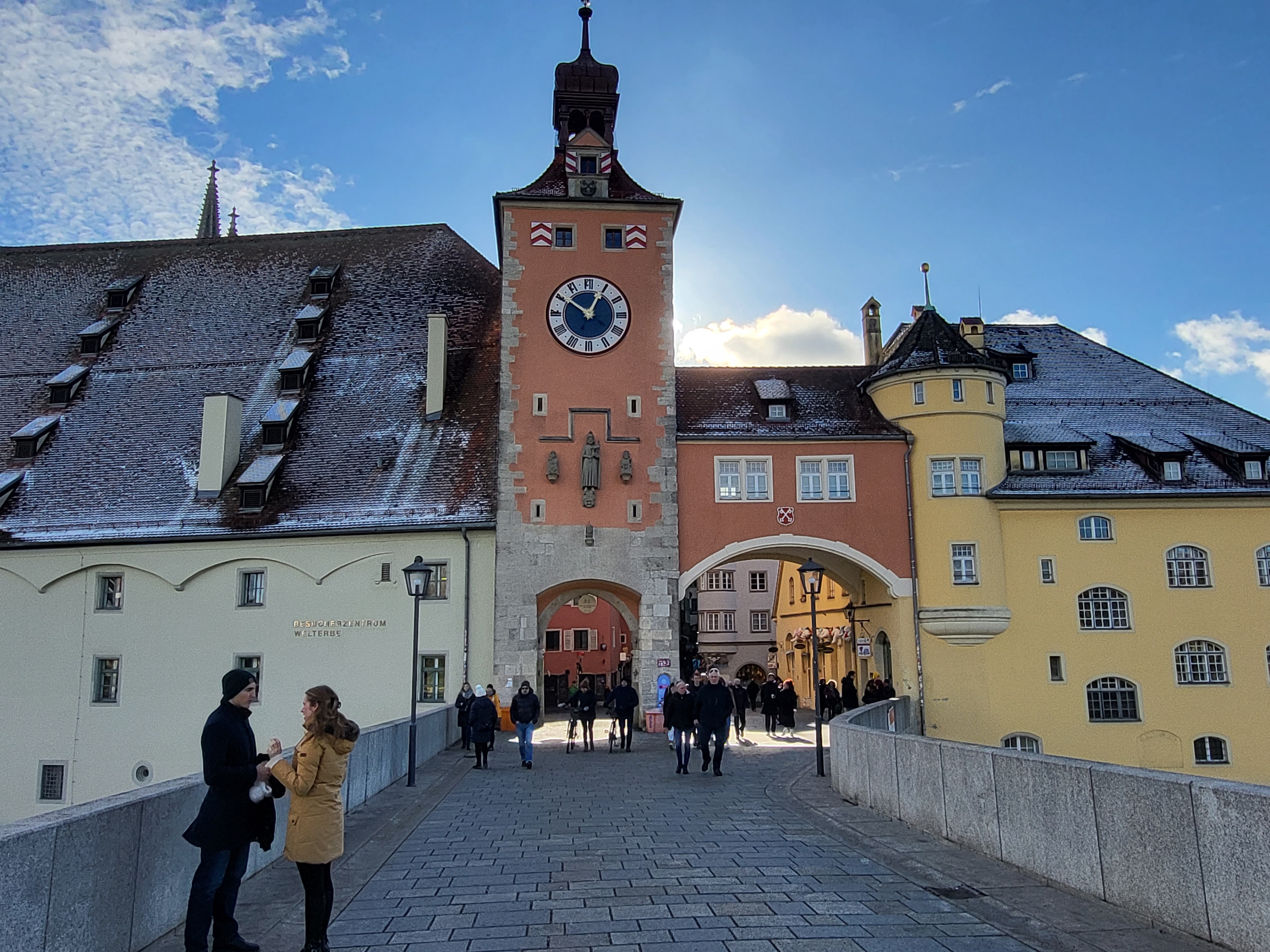
After spending a couple days enjoying the season in Munich, we ventured out of the city to go and explore some of Bavaria’s favorite places and we found ourselves in the beautiful city of Regensburg.

Regensburg sits on the meeting point of the Danube, Naab, and Regen rivers. Because of its position, it became a powerhouse for the imperial Roman empire where they built a river fort on the banks. Since then, Regensburg has been considered an influential leader in politics, economics, and culture for this region.


Regensburg old town joined the UNESCO World Heritage list in 2006 for its well preserved architecture and its importance for assemblies during the Holy Roman Empire. There are 984 buildings within the old town that are included in the title. The city suffered only minor damage during WWII and so were able to preserve so much of the character of the old town.


Regensburg and it’s beautiful old town gate has been a favorite place for visitors for centuries. Often compared to the more advertised and more touristy city of Rothenberg ob de Tauber, Regensburg is an active working city with a life and energy all its own. Regensburg is much easier to get to and so makes a perfect day trip from Munich.

The colorful historic center of the city follows along the path of the Danube River. Walking along the stone bridge visitors marvel at the beautiful buildings and the movement of the river. But many don’t realize that the bridge they are walking on is an incredible piece of history too. This bridge was built between 1135-1146 and is a masterful work of medieval building. During the 2nd and 3rd Crusades, knights crossed this bridge on their way to the Holy Land. This bridge also served as an important part of the trade route between Northern Europe and Venice.


Regensburg has always been a place of assemblies and conferences dating back to the medieval period where trades, wars, and liberties were decided. It was here in 1541 that the Old Town Hall where the first Diet of Regensburg took place, a conference where they worked to restore religious unity to the Holy Roman Empire in the face of the growing Protestant Reformation. This was a heated debate that would ultimately lead to the city being predominantly Lutheran while those who still aligned with Roman Catholic beliefs were denied certain privileges.

We walked by the St. Emmeram’s Abbey. Originally founded as a Benedictine monastery in 739, it is now home to a parish church in the complex of the Schloss Thurn and Taxis. We loved the beautiful frescos carefully painted in the archways and the old door to the cemetery.


It was getting late and we needed to catch our train back to Munich. We really loved getting to visit this historic city and see the beautifully preserved buildings from the medieval period. It is really amazing that this city has been so well preserved and still stands as a testament to good building and good fortune.


Interested in some other UNESCO world heritage places? Then you may be interested in these:
Thanks for coming along on this visit to the beautiful city of Regensburg. May you find beauty in art and architecture around every corner.


Leave a Reply to The Travel ArchitectCancel reply