I set off again for an early morning walk through New Orleans, this time heading toward the Warehouse District and the Garden District. The streets were quiet in that peaceful moment before the city fully wakes, and it felt like the perfect time to wander.
The Warehouse District was once the industrial heart of the city, filled with factories and shipping warehouses along the river. Today those same buildings have found new life. Their heavy doors are thrown open and painted in bright colors, welcoming visitors into art galleries, museums, restaurants, and studios.
What was once a place of work and trade has become one of the most creative and vibrant corners of New Orleans.
Warehouse & Garden District in New Orleans:


The National WWII Museum
What brought me to this part of town, however, was not the art galleries but the chance to visit the National WWII Museum. Located in the Warehouse District of New Orleans, it is the largest museum in the United States dedicated to telling the story of World War II and offers an incredibly in-depth look at the many different aspects of the conflict.

The museum itself is massive, spread across several buildings that together tell the story of the war from its early beginnings to the difficult years of rebuilding afterward. You could easily spend an entire day here exploring the exhibits and still feel like there is more to see.
General admission is around $36 per person, with discounts available for students and children. Any World War II veteran is admitted free of charge.


The experience begins in a recreated Union Pacific Railroad train car, where video screens have been designed to look like windows to the past. Visitors can choose a dog tag card that follows the story of a real person who lived during the war. As you move through the museum, you can scan the dog tag at different checkpoints to learn the next chapter of that individual’s experience. It’s a powerful way to connect the large-scale events of history with the personal stories of those who lived through them.


Throughout the museum, exhibits, photographs, artifacts, and films guide visitors through the many dimensions of the war. Each section takes the time to explain the history in detail, creating a deeper understanding of both the global conflict and the human stories behind it. It’s an extraordinary effort of education and remembrance, ensuring that the sacrifices and lessons of the war are never forgotten.


This year also marks the 80th anniversary of D-Day, and the museum has hosted special events to honor those who fought during the Allied invasion of Normandy. One photograph that stood out to me shows then-General Dwight D. Eisenhower speaking with troops shortly before they would depart for the beaches of Normandy. It is said that Eisenhower had gone to raise the morale of the soldiers, but after speaking with them, he left feeling that it was their courage and willingness to serve that strengthened his own resolve.

The museum contains many powerful displays about the events surrounding D-Day, but one moment that stayed with me came from the story of Anne Frank. On the day of the invasion, she wrote in her diary about the hope that liberation might finally come. She wrote, “But where there is hope, there is life. It fills us with fresh courage and makes us strong again.”
Tragically, Anne Frank would not live to see that liberation. Only two months later, her family was discovered in hiding and deported to concentration camps. Of the family, only her father would survive the war.


Walking through the museum was a deeply moving experience. It serves not only as a place of education, but also as a place of remembrance for the countless lives shaped—and lost—during the war.
Leaving the National WWII Museum, I stepped back out into the streets of New Orleans and continued my walk through the city. After spending time reflecting on such a powerful part of history, it felt good to wander again. Just a short distance away, the atmosphere began to change as I made my way toward the quiet streets and grand homes of the Garden District.
The Garden District & Lafayette Cemetery No. 1
After leaving the museum, I continued my walk toward the beautiful and always charming Garden District. This historic neighborhood is one of the most elegant areas of New Orleans, known for its incredible mix of charming cottages sitting beside grand mansions. Wrought-iron fences line the sidewalks, and towering oak trees stretch across the streets, creating shady tunnels that make the entire neighborhood feel peaceful and inviting.
As I wandered the streets, magnolia leaves scattered along the sidewalks and the occasional creak of an iron gate added to the quiet charm of the neighborhood.

The Garden District was first established in 1832 and was later incorporated into the expanding city of New Orleans about twenty years later. Today it remains one of the most picturesque neighborhoods in the city.


The best way to experience the Garden District is simply to wander. Walking up and down the quiet streets, it’s easy to admire the incredible architecture and the careful details that make each home unique. Along the way you’ll find cozy cafes, boutique shops, and plenty of inviting spots to pause for lunch or a cup of coffee.


One of the details that caught my attention everywhere I looked was the intricate wrought-iron fencing surrounding many of the homes. Each gate and fence seemed to have its own unique design, and I couldn’t help but wish I could bring a few of those beautiful ironwork pieces home to frame my own yard.


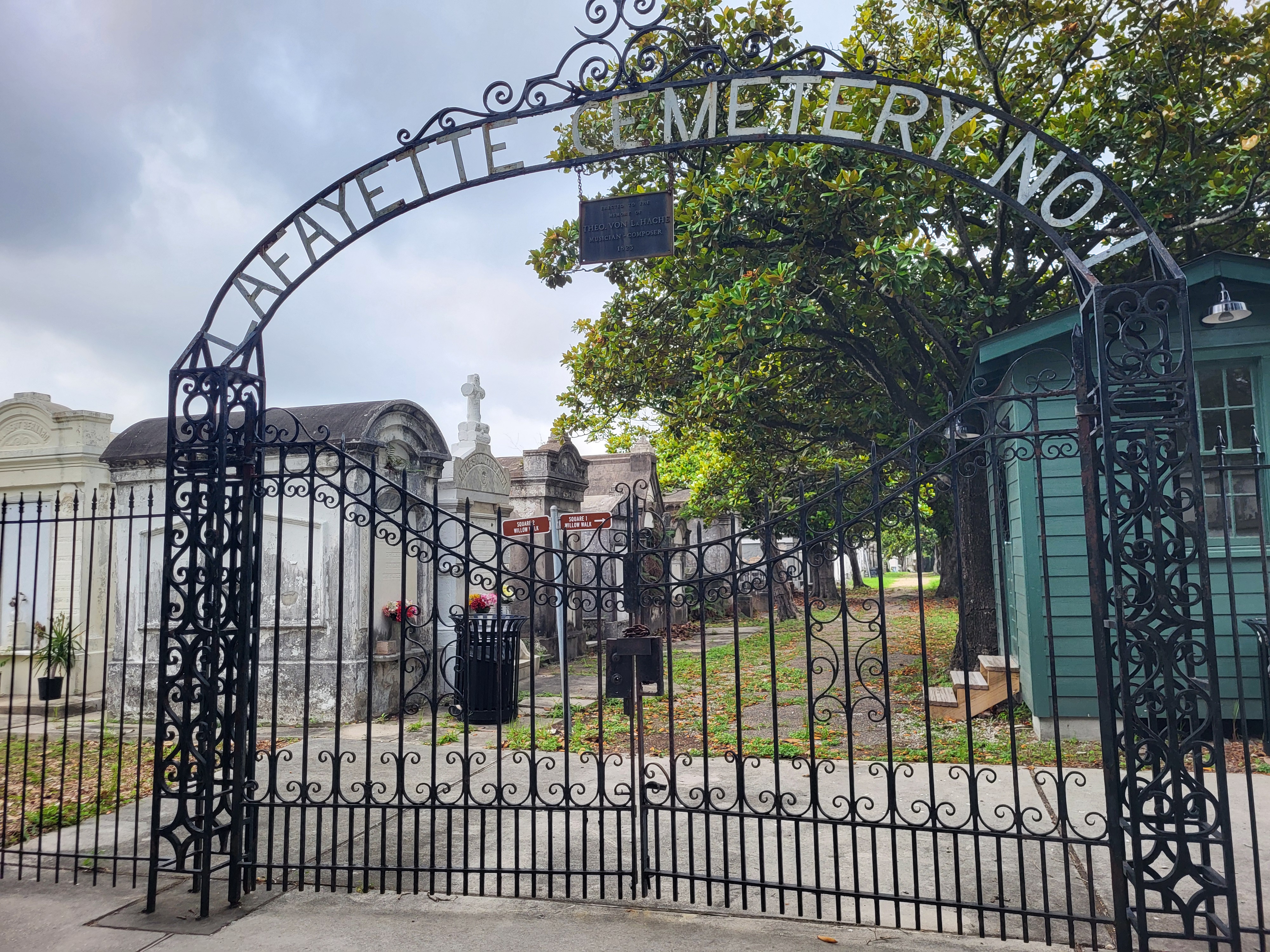
One of the most well-known landmarks in the neighborhood is Lafayette Cemetery No. 1. Established in 1833, it is one of the oldest cemeteries in the city and contains hundreds of above-ground family tombs. Many of the people buried here were early settlers of the area, including families who immigrated from Ireland, Germany, and Italy.

Walking through the cemetery, it’s impossible not to notice the beautiful and sometimes elaborate details carved into the tombs. Narrow pathways wind between the vaults while large trees shade the grounds, creating a quiet and reflective place in the middle of the city. It felt both peaceful and slightly mysterious at the same time.


While Lafayette Cemetery is less famous than St. Louis Cemetery No. 1 near the French Quarter, it remains one of the most recognizable historic cemeteries in New Orleans. It was added to the National Register of Historic Places in 1972.


The cemetery has also appeared in several films and television productions, including scenes from Interview with the Vampire. During the day it is a lovely and contemplative place to walk, but with a little mist and darkness settling in, it’s easy to imagine how the setting could transform into the perfect backdrop for a gothic tale.


Mardi Gras World
Later, I found myself back in the Warehouse District making my way to Mardi Gras World for the opening celebration of the conference. Mardi Gras World is one of the large warehouses where many of the colorful characters and floats used in Mardi Gras are designed, built, and stored throughout the year.
Visiting Mardi Gras World offers a behind-the-scenes look at how the famous Mardi Gras floats of New Orleans are created each year.

Walking into the warehouse was an incredible experience. Everywhere I turned there were towering figures, elaborate props, and bright colors filling the massive space. It felt almost overwhelming in the best way, like stepping into a giant workshop of creativity.


The warehouse itself covers more than 300,000 square feet, and as we wandered through it there was no telling what might appear around the next corner. Even with a space this large, it is only one of several facilities used to house the floats. Another private warehouse nearby is said to be nearly twice as large, holding even more of these larger-than-life creations.

What many people may not realize is that Mardi Gras World is not only home to these incredible float displays—it also doubles as a unique event space. Inside the building are grand staircases, large gathering rooms, and even a recreated plantation-style courtyard used for events and celebrations.
During our visit, the space came alive with music and energy. Bands played for hours while guests wandered among the floats, and the lively sounds of accordions and metal washboards filled the room. It was such a surprising combination—part workshop, part museum, and part celebration space—all existing side by side under one enormous roof.


By the end of the day, I had wandered through so many different sides of New Orleans. From the creativity of the Warehouse District to the powerful history inside the National WWII Museum, and the quiet beauty of the Garden District and Lafayette Cemetery No. 1, each stop revealed another layer of the city’s story.
Ending the evening surrounded by the vibrant floats at Mardi Gras World felt like the perfect reminder that New Orleans is a place where history, creativity, and celebration all live side by side.
It was one of those days that reminded me why wandering a city on foot is often the best way to discover its heart.
If you have enjoyed this visit to New Orleans, you may be interested in these places to visit too:
New Orleans St. Louis Cemetery No. 1 – Louisiana
Thanks for coming along on this visit to the Warehouse District and the Garden District of New Orleans with me. May you always find courage in hope, peace in grief, and joy in the unexpected.

Coming Up Next:
For More Information:
Read More From:
Follow along for more adventures near and far!


Leave a Reply to Teagan Riordain GenevieneCancel reply