On our last day of the trip, we had planned to head to the city of Delft. I had very unapologetic visions of just how many pieces of Delftware ceramics I intended to bring home. But those plans quickly unraveled when we learned that the NATO Summit was being held in nearby The Hague. With road closures and security measures in place, there was no realistic way for us to reach Delft and enjoy the city as we’d hoped.
That’s when we noticed a sign at our hotel pointing visitors toward the beautiful, historic city of Haarlem. It felt like one of those moments when the universe offers a nudge — quite literally — in a new direction. Detours and unexpected pivots had already rewarded us so well on this trip, so it didn’t take much convincing to embrace another one. Off we went toward Haarlem, knowing almost nothing about it beyond what the sign promised: beautiful, historic, and close.
It didn’t take long to realize that this redirection was exactly right. Haarlem turned out to be a smaller, cleaner, and more approachable city than Amsterdam, with a relaxed pace that invited wandering. Its quiet side streets, welcoming squares, and well-loved local spots made it feel instantly comfortable — the kind of place that rewards curiosity without ever feeling overwhelming.
What To Do in Haarlem
- History of Haarlem
- What To Do In Haarlem
- Walk Along the Canals, Bridges, & Side Streets
- Visit the Teylers Museum
- Shopping in the Gouden Straatjes (Golden Streets)
- See the Grote Markt
- Visit St. Bavokerk Protestant Church
- Take A Canal Boat Tour
- See a Show at the Theater
- Visit De Koepel Prison Building
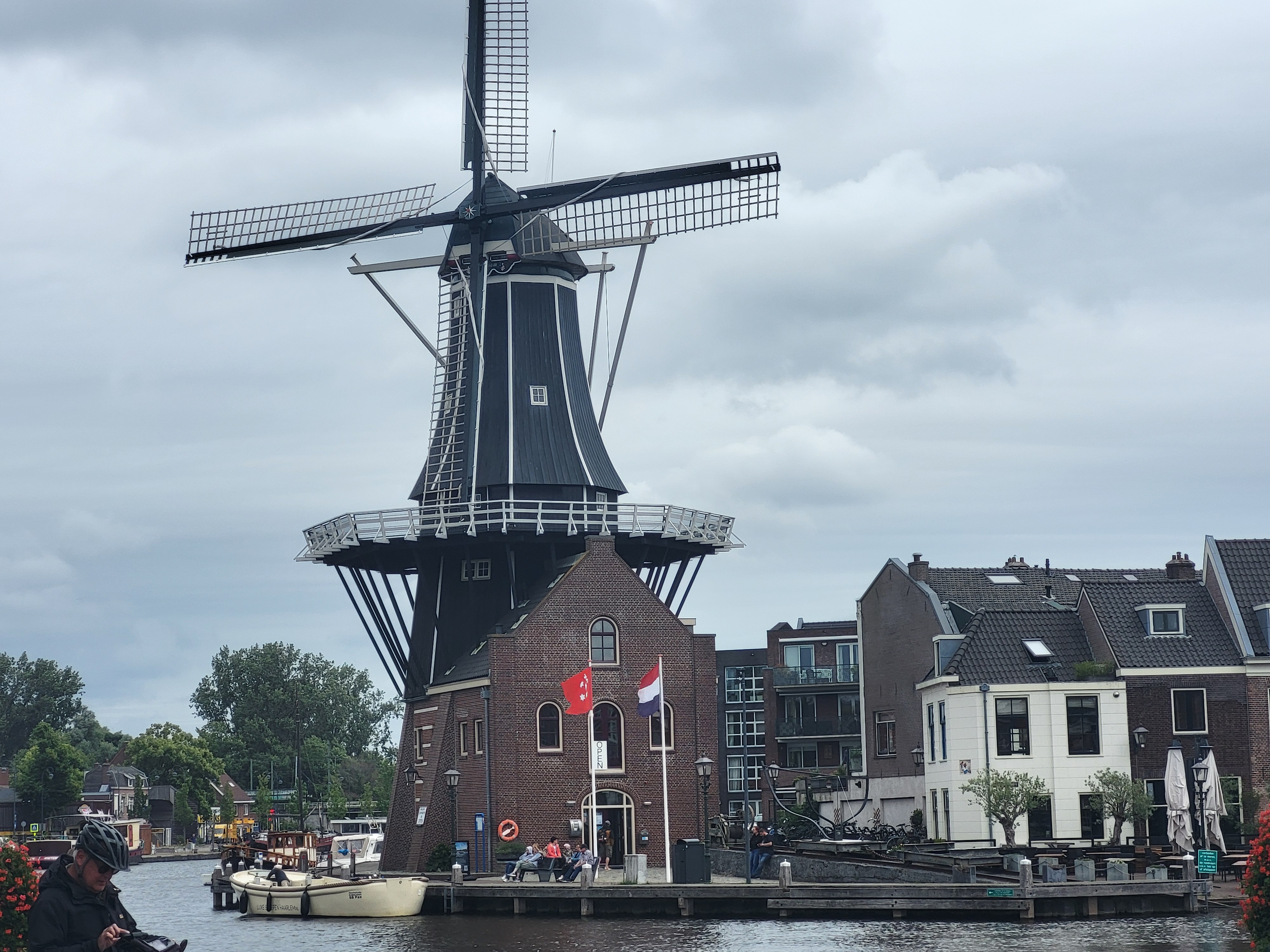
- Tour the Windmill de Adriaan
- Tour the Corrie Ten Boom House


History of Haarlem
Haarlem has a long and layered history that stretches back to pre-medieval times. The first written mention of the city dates to the 10th century, and by the 12th century, Haarlem had grown into a prosperous, fortified settlement. In 1245, it was officially granted city rights, marking its emergence as an important urban center.
As the city developed along the banks of the Spaarne River, canals were constructed to strengthen defenses around the city walls. These waterways helped protect Haarlem from outside threats — but there were dangers even walls and canals could not hold back.
Much of the city was originally built of wood, and devastating fires punctuated Haarlem’s history. Fortunately, its wealth allowed the city to rebuild again and again, each time restoring what had been lost. More difficult to recover from were the outbreaks of disease. The Black Death reached Haarlem around 1381, claiming roughly half of the population — an estimated 5,000 lives. Another wave of plague struck again in 1657, further shaping the city’s history through loss and recovery.
Haarlem’s story continued to unfold through shifting powers and cultural change. The city was seized by the Spanish in the 1500s, while the 1600s brought an influx of Flemish immigrants who helped Haarlem flourish as a center for art during the Dutch Golden Age. In the 1700s, the city became known for tulip cultivation and beer brewing — traditions that still echo today. The 1800s saw French rule, and by the early 1900s Haarlem had developed into a thriving center of textile production, especially known for silk and cotton. During World War II, the city was occupied by Nazi Germany, adding another somber chapter to its long history.
Through centuries of changing rulers, industries, and hardships, Haarlem has maintained a strong sense of identity. Though often viewed as a quieter neighbor to Amsterdam, the city stands on its own — rich in history, resilience, and beauty, and very much a place apart rather than a shadow of something larger.

What To Do In Haarlem
Haarlem is a very walkable city with everything pretty close to each other. This former walled city set on the river has a lot of places to explore and enjoy.
Walk Along the Canals, Bridges, & Side Streets
Just like its larger neighbor Amsterdam, Haarlem has beautiful canals lined with houses and bicycles across the bridges. The tall and detailed houses showcase that beautiful Dutch architecture.

Take any side street away from the canals and you will find clean and charming walkways. Many houses have flowers and benches just outside their door that makes these side streets really lovely.


There are many bridges across the canals, but the general favorite is the Gravestenenbrug Bridge. This pedestrian bridge lifts from the middle to allow larger boats to pass underneath.

Visit the Teylers Museum
The Teylers Museum is the oldest museum in the Netherlands and feels very much like stepping into another century. It was originally the home of Pieter Teyler van der Hulst, a wealthy cloth merchant who believed deeply in the advancement of art, science, and religion. Upon his death, he left much of his estate to support these pursuits, and in 1778 his home was expanded and opened as a museum dedicated to learning and discovery.
- TICKETS: tickets can be purchased in advance or upon arrival to the museum.
- €17.50/adult (ages 24+), €8.75/adult (ages 18-24), €2.50/children (ages 6-17)
- OPENING HOURS: The museum is open Tuesdays- Sundays from 10:00-5:00

Walking through the museum feels like moving through a series of carefully preserved worlds. The first rooms focus on the natural sciences, beginning with a prehistoric collection where bones, fossils, and early figures fill the space. Two long galleries follow, each lined with glass cases stretching the length of the rooms. Inside are meticulously arranged rocks, minerals, fossils, and corals, displayed with a sense of curiosity and wonder that feels distinctly Enlightenment-era.


Another room is devoted to scientific instruments and experiments, showcasing the tools used to better understand the natural world. The collection is impressive, not just for its size but for how thoughtfully it reflects the early pursuit of knowledge.


The heart of the museum, and its most beloved space, is the Oval Room. Once lined with bookcases filled with encyclopedias and scholarly journals, this room was designed for research and study. Over the years it has hosted scientific demonstrations, art exhibitions, and even musical performances. Standing in the Oval Room, it’s easy to imagine generations of thinkers gathering here, driven by curiosity and a shared desire to understand the world a little better.

Shopping in the Gouden Straatjes (Golden Streets)
The Gouden Straatjes, or Golden Streets, make up one of Haarlem’s most popular shopping areas. Larger, well-known stores line the main thoroughfares, while smaller boutique shops are tucked along the charming side streets branching off from them. Even if shopping isn’t on your agenda, this is a wonderful area to wander. The streets invite you to slow down, peek into windows, and enjoy the character of the neighborhood just as much as what’s for sale.


See the Grote Markt
The Grote Markt has been the heart of Haarlem since the city’s earliest days. This central square is where the layers of Haarlem’s history come together, surrounded by historic buildings that quietly hold centuries of stories. Archives, antiquities, and civic life have all flowed through this space, carefully preserved within the architecture that frames the square.
Today, the Grote Markt still feels very much alive. Cafés spill out onto the square, locals linger, and visitors naturally find themselves drawn here again and again. Standing in the center, it’s easy to feel how the past and present coexist — history not sealed away, but woven into the everyday rhythm of the city.

Visit St. Bavokerk Protestant Church
The towering presence of St. Bavokerk Protestant Church dominates Haarlem’s central square. Dating back to the 15th century, the church was built during a period when the city was rising in wealth and influence. Its size and ornate design were not solely the result of a large religious population, but also a deliberate display of prosperity and civic pride.
Inside, the church holds a remarkable musical legacy. Its famous organ has been played by both Handel and Mozart, drawing music lovers from around the world who come to see — and hear — an instrument once touched by these masters. Standing beneath it, it’s easy to imagine the sound filling the vast space, connecting centuries of music, history, and craftsmanship.

Take A Canal Boat Tour
We decided that no visit to the Netherlands would be complete without a canal boat tour. We booked an open boat tour with Luxe Sloepen, which felt like the perfect way to see Haarlem from a different perspective. The tour lasts about an hour and begins near the windmill, winding its way through the historic canals that frame the city.
Our guide was excellent, sharing stories and history along the route in multiple languages so that everyone on board could follow along. Drifting quietly through the canals offered a slower, more relaxed view of Haarlem — one that highlighted the city’s charm and gave us a deeper appreciation for how closely life here is connected to the water.
- TICKETS: Tickets should be purchased online before arriving for the tour.
- € 22,50/adult (ages 12+), € 10,75/children (ages 11 and younger)

The tour follows the canal that at one point served as a kind of moat outside the city wall. In this way, the city had layers of protection from outside threats. The city wall no longer stands, but there are still glimpses of medieval city that it protected.


See a Show at the Theater
If you’re hoping to take in a show or concert while in Haarlem, the Municipal Theater is the place to go. The building itself is something of an architectural oddity, blending old and new in a way that’s both surprising and memorable. The front portion of the theater is historic and traditional, while the newer rear addition is clad in striking icy blue tiles.
The contrast is so unexpected that locals jokingly refer to it as an ice castle rising beside the river. Whether you’re there for a performance or simply passing by, the theater stands out as a playful reminder that Haarlem isn’t afraid to let its architecture evolve — even when that evolution sparks a bit of humor.

Visit De Koepel Prison Building
Another fascinating oddity in Haarlem is the Koepel Prison, a building with a very different past than its present. Once a working detention center, the circular structure was designed for strict confinement. Its imposing domed roof and narrow windows reinforced the feeling of isolation, making it a highly controlled and inward-facing space.
After the prison was decommissioned, the city chose to reimagine rather than erase it. Today, the Koepel has been transformed into a lively entertainment district. Visitors now come not to be confined, but to gather — to eat, shop, attend events, and even spend the night in one of the on-site hotel rooms. The contrast is striking, and walking through the space carries a strange but compelling sense of history layered beneath modern life.
It’s a perfect example of how Haarlem honors its past while allowing places to evolve, giving old structures new purpose without losing their stories.

Tour the Windmill de Adriaan
Haarlem’s Windmill De Adriaan is both an icon of the city and a deep point of local pride. First built in 1779, the windmill stood atop one of Haarlem’s former defensive towers along the Spaarne River. Over the centuries, it served many purposes — originally producing building cement, then processing tobacco, and later grinding grain. For generations, De Adriaan was a familiar and central presence in the daily life of the city.
- TICKETS: Tickets to tour the windmill can be purchased online or upon arrival. You can only see the mill as part of a guided tour.
- €7,50/adults (ages 13+), €3,50/ children (ages 5-12)
- children under five are not allowed on the tour for safety
- ACCESSIBILITY: The tour goes up several steep ladders and is not suitable for those with limited mobility

In 1932, tragedy struck when the windmill caught fire. Citizens watched in disbelief as the beloved structure burned to the ground. Although there was an immediate desire to rebuild, the funding and resources required proved difficult to secure. It would take nearly seventy years before De Adriaan was finally rebuilt, rising once again on its original foundation as a symbol of resilience and remembrance.
Today, the windmill welcomes visitors as both a museum and a working grain mill. Guided tours lead visitors through the various levels, explaining the mechanics of different types of windmills and the role they once played throughout the Netherlands. But De Adriaan is not simply preserved as a relic of the past — it has reclaimed its original purpose. Weather permitting, trained millers still operate the sails and grind grain on site, carefully adjusting the wind and stones by hand. The flour produced here remains a local favorite, continuing a tradition centuries in the making.


Touring the windmill offered a real appreciation for the skill, patience, and precision required to keep it running. Each step revealed just how deliberate the entire process is. And from the top, the views over Haarlem — the river, rooftops, and spires — were as memorable as the history itself.


Tour the Corrie Ten Boom House
Haarlem is also home to the Corrie ten Boom House. Corrie ten Boom was the author of The Hiding Place, in which she recounts her family’s efforts to hide Jewish people and members of the resistance during the Holocaust.
The ten Boom family ran a watch shop in the center of Haarlem, living in the rooms above it. When the city was occupied by Nazi forces, they secretly built a small hidden room within the house, where Jewish people and others in danger could take refuge. Through a network of trusted contacts — including local businesses, resistance members, and religious groups — the family helped many people find safety or escape persecution.
The ten Booms used quiet signals to indicate when it was safe to approach the house, creating a system of protection that relied heavily on trust and community. But eventually, the family was betrayed. The hiding place was discovered, and the ten Booms were arrested. Corrie and several members of her family were sent to concentration camps, where many did not survive. Corrie herself endured imprisonment and suffering, but she lived to tell the story.
After the war, Corrie ten Boom wrote about her experiences, not only documenting the horrors she witnessed, but also sharing a powerful message of forgiveness and faith in the face of unimaginable loss.
After visiting the Anne Frank House the day before, our emotional reserves were already stretched thin. We knew that touring the Corrie ten Boom House would be deeply moving, and we chose to save that visit for another time — approaching it with the care and attention it deserves.
Haarlem turned out to be the perfect ending to our trip. It held so many of the things we love most about traveling — unexpected detours, small towns, streets made for wandering, rich history, and moments that linger long after the day ends. Once again, a change in plans led us to a new favorite place. And especially after our time in Amsterdam, we found ourselves appreciating Haarlem’s slower pace and more approachable feel even more.
One of the things we admired most was how thoughtfully the city has repurposed its historic spaces. A windmill rebuilt atop an old city gate, an entertainment district created from a former prison, and a museum of art and science grown out of a private home — rather than tearing these places down, Haarlem has given them new life. It felt like a city committed to honoring its past while still making room for the future.
This was our first visit to the Netherlands, but it certainly won’t be our last. There are many more cities to explore and experiences to discover in this beautiful country, and Haarlem was a wonderful reminder that sometimes the most meaningful places are the ones you didn’t plan on visiting at all.


Want to catch up on all where we’ve been on this European adventure?
Strolling & Surprises Through Salzburg- Austria
Hiking the Sigmud Thun Gorge in Hohe Tauern National Park- Austria
Perfect Views & Family Bones- Exploring Hallstatt- Austria
Painted Houses, Mountain Views, Violins & Masks- A Day in Mittenwald- Germany
Summer Days Around Munich- Germany
Thanks for coming along on this visit to Haarlem. May you rise like a windmill from the ashes and a city from the river.

Upcoming Destination:
For More Information:
Read More From:
Follow along for more adventures near and far!


Leave a Reply to leightontravelsCancel reply