On a cold and blustery day when we didn’t want to stay home but also didn’t want to brave the weather for long, we decided on a visit to the Tennessee Aquarium in Chattanooga. It’s the perfect kind of outing for in-between days — warm, engaging, and easy to explore at your own pace.

Before you even step inside, the Tennessee Aquarium makes an impression. Sitting right along the banks of the Tennessee River in downtown Chattanooga, the setting alone feels intentional — water surrounding a place dedicated to aquatic life. The open-air plaza between the buildings features playful architectural details, with curved pedestrian bridges arching over broken stone fountain features that double as stepping stones. In warmer months, children splash in the shallow water and hop from stone to stone, turning the entrance into part of the adventure itself.
The aquarium is uniquely divided into two separate buildings: River Journey and Ocean Journey. One focuses on freshwater ecosystems, while the other explores ocean habitats, allowing visitors to experience both worlds in a single visit.
- Exploring the River Journey Building
- Stepping Into the Ocean Journey Building
- Why The Tennessee Aquarium is Perfect for Families
- What to Know Before You Go


Exploring the River Journey Building
We started our visit in the River Journey building, joining the steady line of visitors heading toward the escalator that carries you to the top floor. From there, you slowly make your way down through the exhibits — a layout that makes it easy to see everything without feeling rushed.
At the top, we stepped out beneath a glass roof into the river otter habitat, where the otters were happily darting through the water and splashing into rocky pools. A couple of them were roughhousing, tumbling over each other in a way that briefly concerned some of the younger visitors nearby. Their parents just laughed and shrugged — “That’s what siblings do.” It was hard not to stand there and watch them for a while.


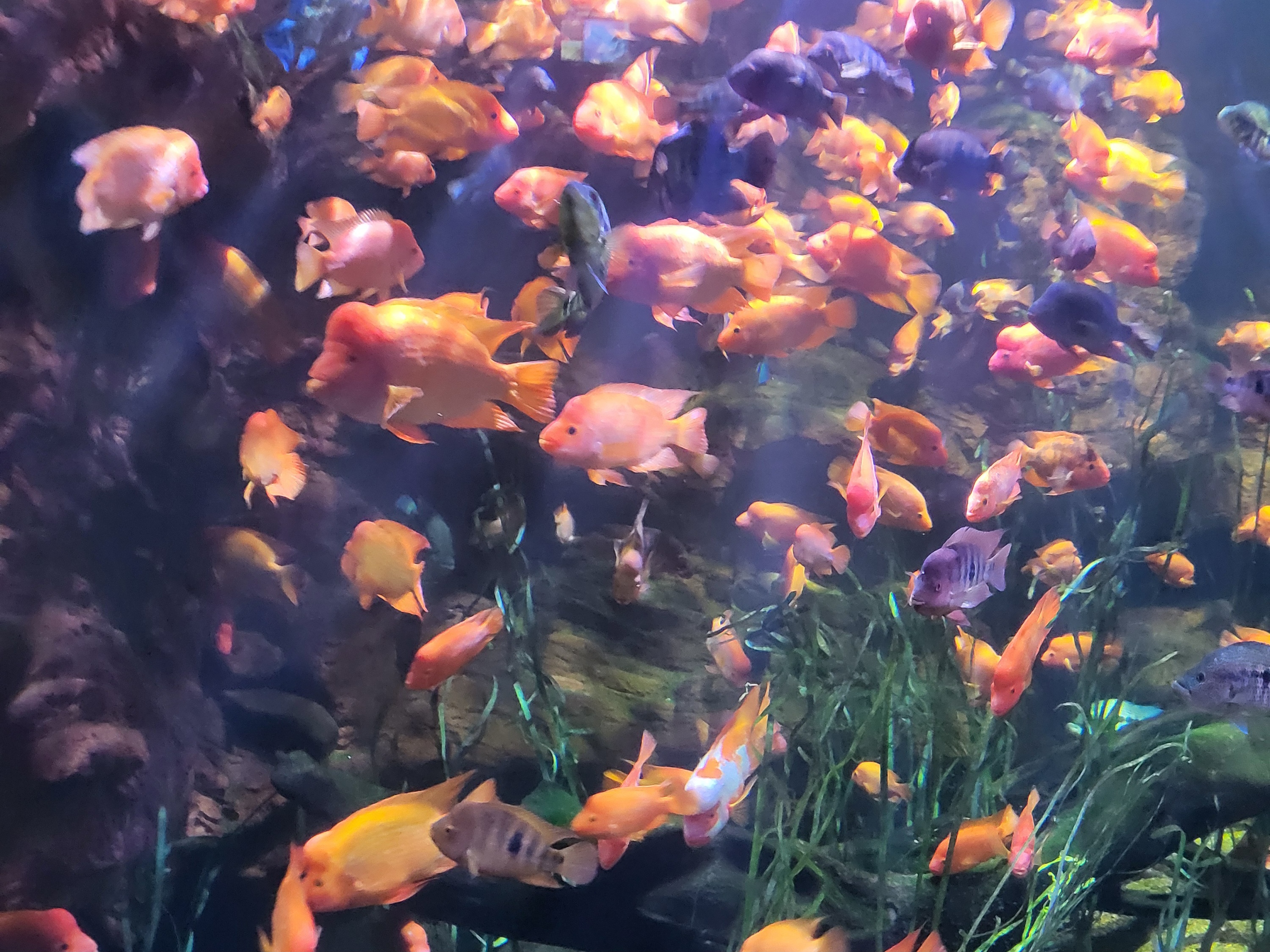
From there, we followed the winding ramps as they carried us between exhibits filled with river wildlife. Brightly colored schools of fish moved in synchronized patterns, and turtles lounged in piles on sunlit logs. Even the albino alligator was fascinating to see up close — though we were all very grateful for the thick glass separating us.


One of the biggest highlights, especially for us, was the turtle nursery. Dozens of tiny baby turtles were being carefully cared for before eventually joining the larger habitats. Watching them paddle in their small tanks felt both sweet and hopeful — a small reminder of the conservation work happening behind the scenes.


Stepping Into the Ocean Journey Building
Next, we made our way over to the Ocean Journey building, where the layout mirrors the River Journey experience — starting at the top and gradually working your way down.
At the very top is the butterfly garden. We stood as still as we could, hoping one might flutter down and land on us. The space was alive with color — butterflies of every size drifting between vibrant flowers. For a moment, it felt less like an aquarium exhibit and more like stepping into a hidden garden, tucked away from the rest of the world.

From there, we moved on to the touch tanks, gently petting stingrays as they glided close enough to the surface to reach. Watching them move so gracefully through the water made it easy to forget how unusual the experience really was.
The penguins were an easy favorite. We lingered there for quite a while, laughing as they torpedoed past underwater and then popped up onto the rocks, wings stretched wide as if preparing for flight. Their playful energy was hard to walk away from.


Much of the Ocean Journey building centers around one massive tank, offering multiple levels and viewing angles into the same expansive habitat. From above, beside, and below, you can watch marine life move through the water in slow, mesmerizing patterns. The steady, purposeful glide of the sharks is always a little intimidating — once again making us very grateful for the thick glass between us.
We almost missed the octopus, tucked high against the glass, with only one dangling tentacle visible below. It felt like a small discovery — the kind that rewards you for slowing down.


As part of the aquarium’s conservation efforts, a larger-than-life seahorse sculpture made entirely from trash collected from the ocean stands nearby. It’s a powerful and sobering reminder of the impact even small pieces of litter can have on marine life.


Why The Tennessee Aquarium is Perfect for Families
One of the things I appreciate most about the Tennessee Aquarium is how manageable it feels for families. Even though there is plenty to see, the layout makes it easy to explore without feeling overwhelmed. Starting at the top and working your way down means you don’t have to backtrack or worry about missing exhibits.
Because everything is indoors, it’s an ideal option for cold, rainy, or overly hot days — something every parent needs in their back pocket. The exhibits are close enough together to keep kids engaged, but spacious enough that you don’t feel crowded.
There’s also a good balance between high-energy excitement and slower, quieter moments. Kids can press up against the glass watching otters dart through the water or penguins zip past, then slow down to study turtles resting on logs or search for a camouflaged octopus tucked into a corner.
The interactive elements, like the stingray touch tanks, add just enough hands-on experience to keep it memorable without turning the visit into chaos. And because the flow of each building naturally guides you downward, it’s easy to take breaks and move at your own pace.
Whether you’re visiting with toddlers, elementary-aged kids, or even teens, there’s something here that captures attention — and holds it.


What to Know Before You Go
Location:
The Tennessee Aquarium is located in downtown Chattanooga, right along the banks of the Tennessee River. Its riverfront setting makes it easy to pair with a walk across the Walnut Street Bridge or a stroll along the Chattanooga Riverwalk.
Tickets:
Tickets can be purchased online or at the entrance. Buying ahead of time is helpful during weekends and school breaks, when it can get busy. Pricing varies by age, with discounts typically available for children and seniors.
How Long to Plan:
Most families will want to allow 2–3 hours to explore both the River Journey and Ocean Journey buildings at a relaxed pace. If your kids love lingering at exhibits (especially the penguins or otters), you could easily spend longer.
Parking:
There are paid parking lots and garages within walking distance of the aquarium. Street parking may also be available depending on the day and time.
Strollers & Accessibility:
The layout — starting at the top and gradually working your way down — makes the aquarium very stroller-friendly. Elevators are available, and the ramps between exhibits allow for an easy flow through each building.
Best Time to Visit:
Weekday mornings tend to be quieter. If visiting on a weekend, arriving earlier in the day can help you avoid peak crowds.
Some adventures are big road trips and bucket list destinations. Others are simple afternoons that break up the ordinary. Visiting the Tennessee Aquarium was one of those steady, satisfying kind of days — where we learned something new, lingered a little longer than expected, and left feeling like we had made the most of a cold afternoon. Sometimes that’s all you really need.
Want to explore more of Chattanooga? Then you may be interested in these places:
Thanks for coming along on this visit to the Tennessee Aquarium in Chattanooga. May you have energy like an otter and find rest like an octopus.

Follow along for more adventures near and far!


Leave a Reply