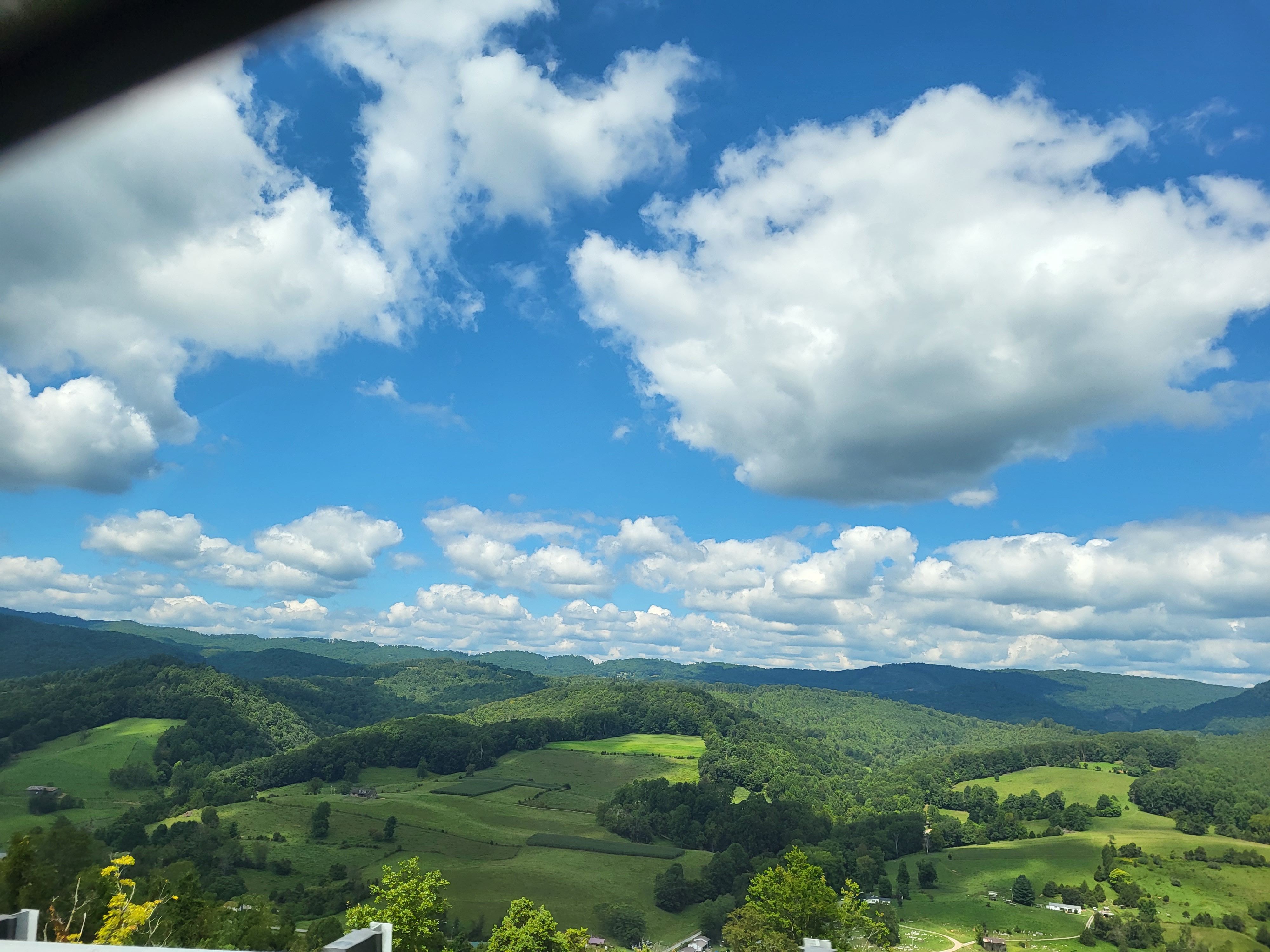
Sometimes the best thing you can do is get away for a few days and let the mountains slow you down.
After a busy season of work, commitments, and everyday responsibilities, we found ourselves needing a break. With a long weekend ahead of us, we packed up the car and headed for the Appalachian Mountains in the northeast corner of Tennessee.
This corner of the state sits at the crossroads of Tennessee, North Carolina, Virginia, and Kentucky, making it an ideal base for exploring some of the region’s most scenic and historic destinations. Over the course of the weekend, we would walk through Revolutionary War history at Sycamore Shoals, drive a section of the Blue Ridge Parkway, visit waterfalls and mountain overlooks, spend time at Beech Mountain Resort, and stand at the famous Cumberland Gap where generations of travelers once crossed into the American frontier.
It was exactly the kind of weekend we needed—part history, part mountain adventure, and a reminder that sometimes the best way to find balance is to spend a few days exploring the places just beyond your doorstep.
Appalachian Highlands Weekend
- Exploring Tennessee’s Frontier History at Sycamore Shoals
- Mountain Views at Beech Mountain Resort
- Driving the Blue Ridge Parkway & Hiking to Linville Falls
- A Quick Stop at Cumberland Gap
- Why We Loved This Appalachian Highlands Road Trip
- Know Before You Go: Appalachian Highlands
Weekend Itinerary: Appalachian Highlands Road Trip
- Day One:
- Sycamore Shoals State Historic Park
- Carter Mansion
- Day Two:
- Beech Mountain Resort
- Blue Ridge Parkway
- Linville Falls
- Day Three: Cumberland Gap National Historic Park
Exploring Tennessee’s Frontier History at Sycamore Shoals
Our first stop of the weekend was Sycamore Shoals State Historic Park, located along the banks of the Watauga River in Elizabethton, Tennessee.
At first glance, the park seems quiet and unassuming. But this small stretch of river played an important role in the early history of Tennessee and the American Revolution. The first permanent settlement in the area was established here in 1770, making it one of the earliest communities west of the Appalachian Mountains.
Today, visitors can walk through a reconstructed frontier fort that offers a glimpse into life on the edge of the wilderness. The park also does an excellent job of interpreting the complicated history of the settlers and the Native American tribes who called this region home long before the arrival of Europeans.


During the Revolutionary War, Sycamore Shoals became a gathering place for the Overmountain Men—frontiersmen who crossed the Appalachian Mountains to join the fight for independence. Their journey would eventually lead to the pivotal Battle of Kings Mountain, and they remain some of the most celebrated figures in Tennessee history. A statue near the visitor center honors their contribution to the Revolution.
As we explored the grounds, the trees echoed with the unmistakable buzz of cicadas. One had settled on a nearby tree, giving us a close look at the surprisingly large insect responsible for the soundtrack of a Southern summer.


Before leaving the area, we made a quick stop at the nearby Carter Mansion. After a conversation with my blogging friend, The Travel Architect, about the oldest buildings in our home states, I couldn’t resist the chance to visit Tennessee’s oldest frame house. Built in the late 1700s, the mansion belonged to the Carter family, who played a significant role in the early settlement and development of the region.

Together, Sycamore Shoals and the Carter Mansion offered the perfect introduction to the Appalachian Highlands—combining frontier history, Revolutionary War stories, and some of the earliest chapters of Tennessee’s past.
Mountain Views at Beech Mountain Resort
From Sycamore Shoals, we crossed into North Carolina and made our way to Beech Mountain Resort.
Perched high in the Blue Ridge Mountains, Beech Mountain is best known as the largest ski resort in the Southeast. Seeing a ski resort in the South always feels a little surprising, but the elevation here creates a mountain environment that feels worlds away from the valleys below.

While winter brings skiers and snowboarders to the slopes, summer transforms the resort into a destination for hikers, mountain bikers, and anyone looking to enjoy the cooler mountain temperatures. As we explored the resort, we watched mountain bikers race down the trails, navigating steep turns and rocky terrain with an ease that left us both impressed and slightly jealous. I think next time we visit, I may have to give it a try myself.

Visitors can purchase a scenic chairlift pass during the warmer months, making it easy to enjoy the views without tackling the climb. We decided to take the opposite approach and hike one of the main trails instead.
The trail quickly reminded us that our hiking muscles were not quite as prepared as we thought they were. Still, there was something refreshing about slowing down, moving through the mountains, and breathing in the cool mountain air. Every turn offered another view of the surrounding peaks, and for a little while all the stress and busyness that had prompted this trip seemed very far away.

Sometimes a destination doesn’t need a major attraction to be memorable. Sometimes all it takes is a mountain trail, a wide-open view, and a chance to spend a few hours outside.
Driving the Blue Ridge Parkway & Hiking to Linville Falls
One of the highlights of the weekend was finally turning onto the legendary Blue Ridge Parkway.
Stretching 469 miles between Great Smoky Mountains National Park in North Carolina and Shenandoah National Park in Virginia, the parkway is often considered one of America’s most scenic drives. Despite its popularity, many first-time visitors are surprised to discover that it isn’t a large highway at all. Instead, it is a winding two-lane road designed for slowing down and taking in the views.
Around every bend were layers of blue-green mountains stretching into the distance. It was easy to understand why so many people consider the Blue Ridge Parkway a destination in its own right rather than simply a road connecting two places.

One of our planned stops along the route was Linville Falls, one of the most popular waterfalls on the parkway. We parked near the visitor center and followed the trail through the forest toward the falls.
The hike is relatively easy, making it a great option for families and visitors of all ages. Along the way, we crossed through tunnels of rhododendron and rocky sections of trail while catching some of the first hints of fall color beginning to appear in the trees.


When we reached the overlook, we could see the Linville River cascading over the rocks below. What struck us most was how quickly the character of the water changed. Upstream, the river moved quietly through the forest. Just beyond the falls, however, it plunged into Linville Gorge where the water transformed into a rushing torrent winding through the rugged landscape.

The contrast between the peaceful river and the wild gorge was remarkable. Standing at the overlook, listening to the roar of the falls and looking out over the surrounding mountains, it felt like a perfect snapshot of the Appalachian Mountains themselves—beautiful, peaceful, and untamed all at once.

A Quick Stop at Cumberland Gap
As we were leaving Linville Falls, we noticed a loud thumping noise and vibration coming from the car. Being several hours from home and deep in the mountains is never the ideal place to discover a mechanical problem.
The next morning, we were waiting outside a local repair shop when they opened. The staff was incredibly kind and moved us to the front of the day’s schedule so we could continue our journey home. A few hours later, with replacement parts installed and the problem solved, our faithful vehicle was ready to go once again.
Considering the car is approaching 400,000 miles and has carried us on adventures across much of the country, we can’t complain too much about a repair here and there. We’re determined to see just how many miles this travel companion still has left in it.
The unexpected delay changed our plans, but we still decided to make one final stop before heading home—the historic Cumberland Gap.

For thousands of years, the Cumberland Gap has served as a natural passage through the Appalachian Mountains. Long before European settlers arrived, Native American tribes used the route while following bison migrations through the region. Later, pioneers and frontiersmen would travel through the gap as they moved westward into Kentucky and beyond.
Often called the “First Gateway to the West,” the Cumberland Gap helped shape the movement of people across the American frontier. More than 300,000 settlers are believed to have passed through this mountain corridor in search of new opportunities.


Today, Cumberland Gap National Historical Park preserves more than 14,000 acres of mountains, forests, and historic landscapes across Tennessee, Kentucky, and Virginia. From the famous Pinnacle Overlook, visitors can look out across all three states and gain a sense of why this passage became so important throughout American history.
Unfortunately, the car repairs meant we arrived much later than planned. With several hours of driving still ahead of us, we didn’t have time to explore the trails or historic sites the way we had hoped.

Instead, Cumberland Gap became one more reason to return. Sometimes the best trips leave a few things unfinished. They give you a reason to come back.
Why We Loved This Appalachian Highlands Road Trip
One of the things we loved most about this trip was the variety it offered in just a few days. In a single weekend, we explored Revolutionary War history at Sycamore Shoals, enjoyed mountain views at Beech Mountain, drove one of America’s most scenic roads along the Blue Ridge Parkway, hiked to a beautiful waterfall, and stood at one of the most important frontier passages in American history at Cumberland Gap.
It felt like the perfect blend of history, outdoor adventure, and scenic driving. Even better, many of these destinations are within a relatively short drive of one another, making it easy to experience several states and landscapes without spending the entire weekend in the car.

Know Before You Go: Appalachian Highlands
Best Time to Visit
Fall is one of the most beautiful times to visit the Appalachian Highlands, with colorful foliage, cooler temperatures, and excellent hiking conditions. Spring and summer are also great options for waterfalls, scenic drives, and outdoor activities.
Allow Time for Scenic Stops
One of the best parts of this region is the unexpected overlooks, small towns, and historic sites you’ll find along the way. Build some flexibility into your schedule so you can stop when something catches your eye.
Check Seasonal Hours
Historic sites such as Sycamore Shoals and the Carter Mansion may have seasonal schedules, while portions of the Blue Ridge Parkway can occasionally close due to weather or maintenance.
Pack for Changing Mountain Weather
Mountain weather can change quickly. Even during warmer months, it’s a good idea to bring a light jacket and comfortable walking shoes.
Don’t Rush the Parkway
The Blue Ridge Parkway is meant to be enjoyed slowly. Give yourself extra time to stop at overlooks, take short walks, and simply enjoy the mountain scenery.
Plan a Return Visit
A long weekend is enough time to experience many highlights, but this region offers far more than can be seen in a single trip. Consider this itinerary an introduction to an area you’ll likely want to explore again.

As we made the long drive home, I found myself reflecting on the weekend as a whole. Between the frontier history of Sycamore Shoals, the mountain views at Beech Mountain, the winding roads of the Blue Ridge Parkway, the beauty of Linville Falls, and the historic significance of Cumberland Gap, the trip had been exactly what we needed.
The Appalachian Mountains have a way of slowing life down. Out here, the endless to-do lists and deadlines seem a little less urgent. The mountains remind you to look up, take a deep breath, and appreciate the world around you. Whether we were hiking a trail, standing at a waterfall overlook, or simply watching the scenery roll by from the car window, there was a sense of peace that is hard to find in everyday life.
Even the unexpected car trouble couldn’t take away from that. If anything, it became just another chapter in the story. Travel rarely goes exactly according to plan, and some of the most memorable trips are the ones that require a little flexibility along the way.
We may not have had time to fully explore Cumberland Gap, but perhaps that is part of the beauty of travel. There is always another trail to hike, another overlook to visit, and another reason to return. The mountains will still be there waiting.
For a few days, we traded schedules and responsibilities for mountain air, scenic roads, and a slower pace of life. It was the reset I needed, and a reminder that sometimes the best thing you can do is simply head for the mountains and let them work their quiet magic.
Need some more places in the Appalachians? Then you may be interested in these places:
Thanks for coming to this weekend in the Appalachian Mountains. May paths and rivers take you through the mountains.

Follow along for more adventures near and far!


Leave a Reply