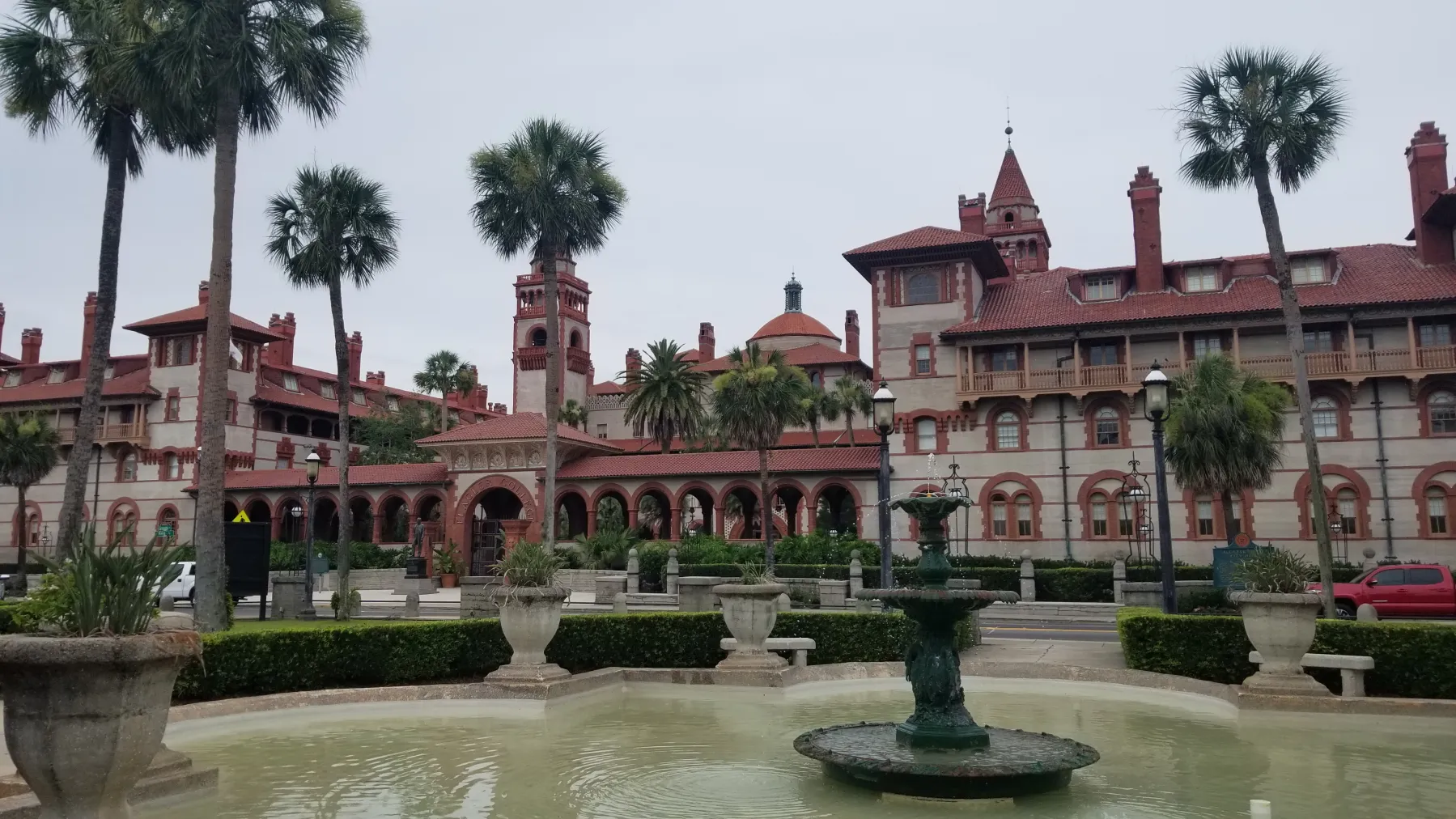
One of our favorite weekends when we lived in Florida was visiting St. Augustine, a city where history seems woven into every street and building. Often called the oldest continuously inhabited European-established city in the United States, St. Augustine was founded in September 1565 by Spanish explorers arriving on the shores of Florida’s first coast.
According to tradition, the explorers first spotted land on the Feast Day of Saint Augustine, inspiring the city’s name. Over the centuries, St. Augustine passed between Spanish, British, and American control, serving at different times as the capital of Spanish Florida, British East Florida, and later the Florida Territory of the United States. Those centuries of changing influences helped shape the unique character that still defines the city today.
Walking through St. Augustine feels like stepping through layers of history. Spanish architecture stands beside coastal scenery, historic churches overlook narrow brick streets, and centuries-old landmarks blend naturally with shops, restaurants, and quiet corners full of charm. It is a city that feels both historic and relaxed at the same time, making it one of the most memorable places we explored while living in Florida.
- Visiting the Lightner Museum & Flagler College
- The Cathedral Basilica of St. Augustine
- Walking Through the Historic Streets of St. Augustine
- Exploring Castillo de San Marcos National Monument
Visiting the Lightner Museum & Flagler College
Our first stop in St. Augustine was the beautiful Lightner Museum, where artwork, antiques, and artifacts from America’s Gilded Age fill the historic halls. The museum itself is housed inside the former Alcazar Hotel, a grand resort originally built during Florida’s tourism boom.
Although the hotel eventually closed during the Great Depression, the building found new life when Chicago publisher Otto Lightner purchased it to house his collections before later donating it to the city.
Today the museum remains one of the most beautiful historic buildings in St. Augustine and is listed on the National Register of Historic Places.


Just across the street stands Flagler College, a private liberal arts college known for its breathtaking architecture. Walking through the campus, we constantly found ourselves stopping to admire the intricate details of the buildings.


But nothing prepared us for stepping inside the dining hall and looking up at the magnificent golden domed ceiling overhead. It felt far more like standing inside a palace or cathedral than a college cafeteria. Comparing it to our own alma maters, we could not help but laugh at just how dramatically different the atmosphere felt.

The Cathedral Basilica of St. Augustine
We also stepped inside the beautiful Cathedral Basilica of St. Augustine, where stained glass windows depicted the life and influence of Saint Augustine through the centuries. Soft light filtered through the colorful glass while the peaceful interior created a quiet contrast to the busy tourist streets outside.
Often referred to as America’s first parish, the cathedral has long stood as an important spiritual landmark within the city. Outside, a statue honored Saint Augustine and the people connected to the early history of the settlement. Standing there surrounded by centuries of history, it was easy to imagine the hopes and uncertainty of those first settlers arriving in an unfamiliar world so many years ago.


Walking Through the Historic Streets of St. Augustine
One of the best parts of visiting St. Augustine was simply wandering through the historic district itself. The narrow streets, old buildings, and peaceful atmosphere encouraged us to slow down and take everything in. Despite being such a popular destination, much of the city still felt surprisingly calm and relaxed.


As we walked through Old Town, we passed small shops, restaurants, and historic landmarks tucked between the colorful buildings. The blend of Spanish, British, and American influences gave the city a character unlike anywhere else we had visited in Florida. Everywhere we turned, there seemed to be another quiet courtyard, historic structure, or hidden detail waiting to be noticed.
We stopped at the historic city gates that have stood guard over St. Augustine for centuries. Though weathered with age, the stone pillars remain an incredible reminder of just how long this city has endured. Nearby stood the Oldest Wooden School House, where generations of children were once educated within the growing settlement.


The city also holds important connections to American history beyond its colonial origins. During the years following the Civil War, Frederick Douglass visited St. Augustine as part of his speaking tour advocating for the continued rights and equality of African Americans after emancipation. Learning about those later layers of history added even more depth to a city already shaped by centuries of change.

Exploring Castillo de San Marcos National Monument
Our final stop of the day was Castillo de San Marcos National Monument, the oldest masonry fort in the continental United States. Construction on the fort began in 1672 after an earlier wooden fortification was destroyed during an English raid on the city. Recognizing the vulnerability of the settlement, Spanish officials ordered the construction of a far stronger stone fortress to protect the important coastal city.


Walking along the battlements overlooking the water, it was easy to understand why this location was chosen. From the fort walls, guards would have been able to spot approaching ships long before they reached the harbor. Over the centuries, the fort changed hands multiple times and was modified by the Spanish, British, and Americans, each leaving their mark on the structure.


During our visit, historical interpreters dressed in period clothing demonstrated the weapons and military traditions of the Spanish soldiers who once defended the fort. We also explored reconstructed barracks rooms showing what daily life would have looked like during the British occupation. It was fascinating to see how one structure could reflect so many different chapters of history within a single place.


St. Augustine was one of those places that felt both beautiful and deeply connected to the past. From historic churches and grand architecture to quiet streets and centuries-old fortifications, every part of the city seemed layered with stories from the people and cultures that shaped it over time.
What we loved most was how naturally history blended into everyday life there. Rather than feeling like an outdoor museum frozen in time, St. Augustine felt alive—full of movement, conversation, ocean air, and the steady rhythm of a city that has continued evolving for more than four centuries.
Exploring America’s oldest city ended up being one of our favorite experiences while living in Florida, and it remains a place we still think about years later.
If you enjoy destinations where history and culture come together, you may also enjoy our other posts exploring historic cities and national monuments across the United States.
Thanks for coming along on this visit to St. Augustine. May you find peace in quiet streets and strength in fortifications.

Coming Up Next:
For More Information:
Read More From:
Follow along for more adventures near and far!


Leave a Reply