One of our favorite weekends when we lived in Florida was visiting Saint Augustine. This city is the oldest, continuously inhabited, city in the country. The city was first established in September 1565 by a group of Spanish explorers.
The ships came from Spain and their first sight of land after the long journey to the new world was on the Feast of Saint Augustine so the admiral declared the city be named Saint Augustine in honor of that.
Saint Augustine would be the capital of Spanish Florida for 200 years. Then in 1753 when the colony was established, Saint Augustine became the capital of British East Florida. Then Great Britain returned Florida to Spain in 1783.
But Spain ceded Florida to the United States in 1819 where it became one of two capitals of the Florida Territory. Through all the back and forth between country ownership and influences, Saint Augustine created a unique and beautiful character. Today it is a popular tourist destination with that mix of ocean water and Spanish architecture.
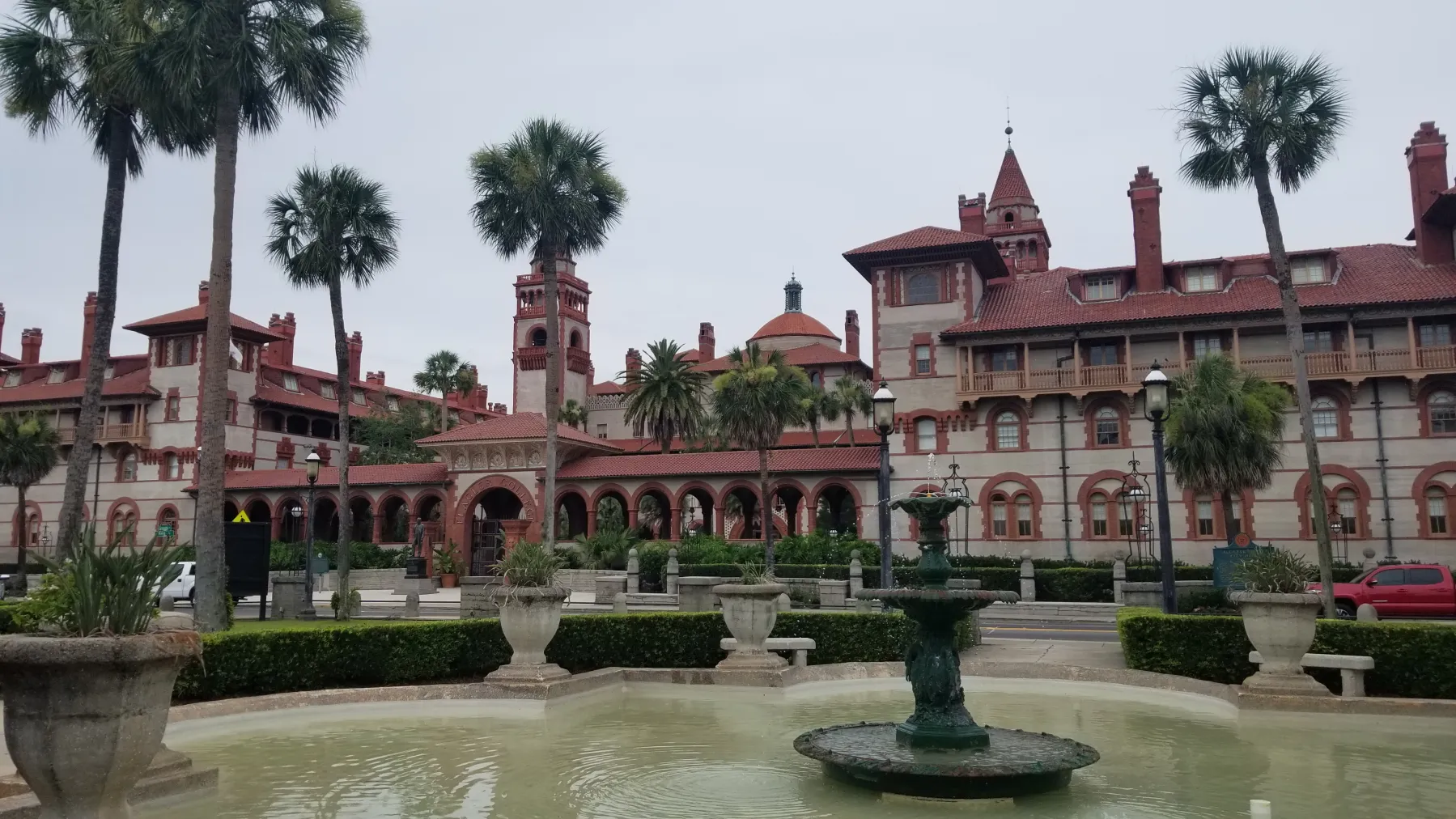
Our first stop in this beautiful city was at the Lightner Museum where antiques and artwork from the American Gilded Age fill the halls. The Lightner Museum is housed in what use to be the historic Alcazar Hotel. The hotel was closed in 1932, but then a publisher named from Chicago came and purchased it with the idea of having it be a hobbies museum to hold his collections. He later turned over the museum to the city for everyone to enjoy. This building is listed on the National Register of Historic Places.


Just across the street from the Lightner Museum is Flagler College. Flagler College is a private liberal arts college with stunning architecture. Walking through campus we couldn’t help but stop and stare at the buildings.


While the outside of the buildings were beautiful, we were not prepared for the stunning piece inside the dining hall as we gazed up at the golden domed ceiling above us. It seemed far more appropriate to be in a palace or cathedral than it did above all the wooden tables of the dining hall of a college. We couldn’t help but compare Flagler College to our own alma maters and feel the vast difference in buildings.

We stepped inside the Cathedral Basilica of Saint Augustine where stained glass windows depicted the life of the saint and his influence through the ages. Outside the cathedral stood a statue of the saint and the people he helped. It is considered ‘America’s first parish’ and has stood as a reminder of the protection of the saint that the first settlers felt they were guided by as they came to the new world.


We walked through the small streets of the historic Old Town of Saint Augustine where there was no rush of people or loud noises. For being such a popular part of the city, it was quite peaceful and we felt our pace slow to fit the feeling around us. Small shops and restaurants lined the streets. You can see the different influences of Spanish, British, and American in all the buildings and the effect is really charming.


We passed the oldest wooden schoolhouse where all the children of the city were educated. We walked through the original city gate that has been standing here since the beginning of the city. Though a little worn it is amazing to think how long those pillars have been guarding entrance to the city.


Saint Augustine was an important stop for Frederick Douglass on his series of speeches about the continued struggle of the African American people in the time after the Emancipation. Frederick Douglass was a personal friend of President Abraham Lincoln and was a great influence of the creation of the Emancipation Proclamation that ended slavery in the United States.

The last stop of the day was at the Castillo de San Marcos National Monument. This is the oldest fort in the country, being constructed in 1672. When the city was first established there was a wooden fort on this spot, but the fort was destroyed in fire when an English privateer raided the city. After that the construction of a stronger fort was ordered. The fort would undergo many alterations and modifications over the centuries.


Walking along the battlements it is easy to see why this would be a powerful place for a fort as it looks out over the water. Most threats would have come by boat and they would have been able to easily spot any impending invaders and put defenses in place long before the boats could reach the fort.


The fort is open daily for tours and they have demonstrations of the different military personnel who lived here. On the day of our visit we learned about the Spanish military and the weapons they used from a period dressed man with long hair. We looked at an old barracks building and how it would have looked when it was British military living there. It was so interesting to learn about the different governances that this fort had been through.


Saint Augustine was such a beautiful and interesting place that had seen the first wave of settlers arrive. Through the centuries of differing powers, they established and maintained a powerhouse city. We loved the day we had exploring this historic and beautiful city on Florida’s first coast.


Leave a Reply to Travels Through My LensCancel reply