Our family has a deep love for national parks. There’s something about heading out onto a trail, not quite knowing what waits around the next bend, that feels like pure adventure. Visiting a national park in another country adds an extra layer of excitement — stepping into a landscape with no expectations, no familiar landmarks, just the thrill of experiencing it for the very first time.
While in Austria, we knew we wanted to carve out time for exactly that kind of day. Austria is home to six national parks, and we were fortunate to be close enough to visit one of them. After spending a day exploring Salzburg, we set out for Hohe Tauren National Park— the first designated national park in the country and still its largest.
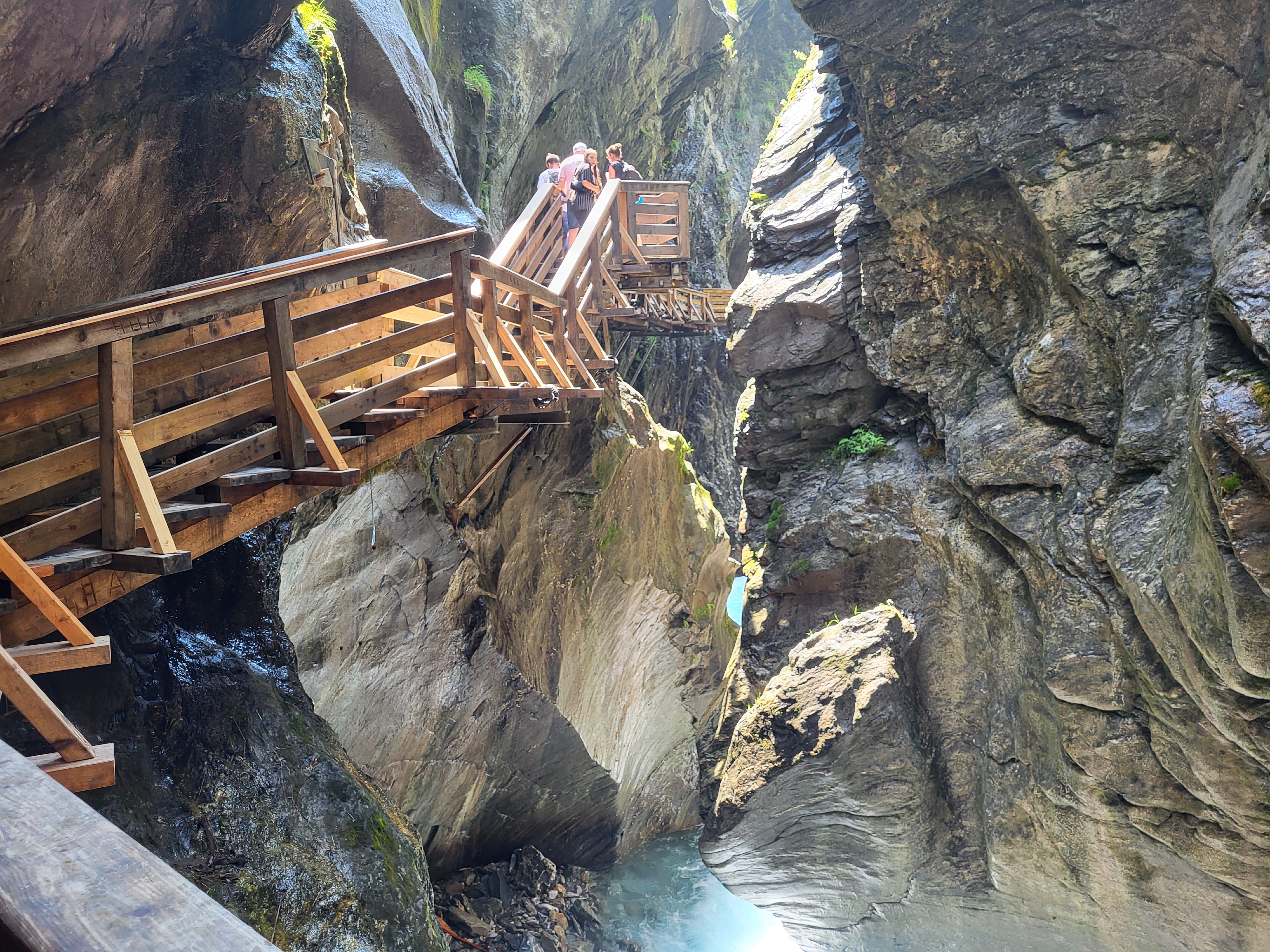
Hohe Tauren is famous for its dramatic mountain peaks and sweeping alpine pastures. But one of its most unforgettable experiences is hiking through the Sigmund Thun Gorge. This narrow gorge draws visitors from near and far, and it didn’t take long for us to understand why.
As we climbed through the gorge, the power of the rushing water was impossible to ignore. The roar was almost deafening, and the vibrations seemed to travel straight through us. It was the kind of place that makes you feel wonderfully small — humbled by the sheer force and beauty of the natural world.
The hike offers incredible views and an immersive encounter with nature at its most dramatic. It quickly became one of our favorite hikes in Austria and remains one of those travel memories that stays with you long after you’ve left the trail.
Hohe Tauren Contents:
- Visitor Information for Sigmud Thun Gorge & Hohe Tauern National Park
- Hiking Up the Sigmud Thun Gorge
- Exploring Around Hohe Tauren National Park

Visitor Information for Sigmud Thun Gorge & Hohe Tauern National Park
- GETTING TO THE NATIONAL PARK: From Salzubrg, we took the REX3 train to the resort area of Zelle Am See. The train ride took about 1 hour. We got off at the central station. Right across from the train station is a bus stop. The bus takes you up to the area of Kaprun. There is a specific stop for Sigmud Thun. The ride takes about 30 minutes.
- ENTRANCE COST: There is no entrance fee to go into the park itself. However, to go up through the gorge you must have a ticket. Discounted tickets are available with a quest card that is provided by some hotels.
- Adults 7.50 without guest card, 6.90 with guest card
- Childlren 5.40 without guest card, 4.80 with guest card
- Discounts available for students, seniors, and those with disabilities
- SPECIAL EVENTS: The gorge has special events such as a lighted walk up the gorge. There are also morning vitality hikes. These events have a separate cost.
- HYRDO ENGIEERING PLANT: At the entrance, visitors can see some of the workings of the hydro engineering plant. This plant processes all the water coming from the gorge.

Hiking Up the Sigmud Thun Gorge
As soon as you arrive, you can see the tail end of the water spilling down the hillside. At first glance, it almost looks peaceful — as though the trail might be a gentle stroll alongside a quiet stream. But the moment you step onto the path and look up into the gorge, you realize this is anything but tranquil.

The gorge is threaded with wooden stairs and narrow platforms that cling to the rock walls. The path carries you directly above and beside the rushing water as it crashes through the stone below. The sound is constant and powerful, echoing off the rock face. It’s incredible to witness the force of the water — every curve and crevice in the gorge carved slowly over centuries by its relentless flow.


Around each bend, new pools and waterfalls appear. The water glows an iridescent blue, striking against the dark rock and green trees overhead. All along the trail, visitors laughed nervously, repeating some version of, “Don’t drop your phone,” as they leaned over railings to capture the view.

Up and up we climbed, surrounded by towering rock walls, trees stretching high above us, and water thundering below. At one point, a covered bridge crossed the gorge while water cascaded beneath — and even over — us. For a moment, we felt completely immersed, as if the entire landscape was flowing around us.


The trail through the gorge is a little over a mile long and, despite the stairs, not overly steep. As we reached the top, the narrow rock walls gradually opened to reveal trees and sky. At the end of the boardwalk sits the spillway, where the water begins its dramatic descent.


From here, you can turn right and follow a path back down to the entrance. Or you can continue left, deeper into the national park. We chose to carry on — we weren’t quite ready to leave this beautiful, powerful place behind.

Exploring Around Hohe Tauren National Park
With the lake stretching out before us and mountains rising beyond it, there was no question that we wanted to keep going. The gorge itself was unforgettable, but the rest of Hohe Tauern National Park offered a completely different kind of beauty — quieter, wider, and just as rewarding.

While many visitors turned back down through the gorge, we followed the water at its source. The path curved gently around the lake, layering sky, mountain, and water into a view that felt almost endless. It’s easy to forget, standing there, that this landscape had to be intentionally protected.
The idea of preserving this area was first proposed as early as 1915, but it wasn’t officially designated as a national park until 1981, after decades of discussion about conservation and funding.

The lake area itself is a shared space — both protected and enjoyed. Families lingered along the shore, children dipping their feet into the cold water and stacking stones into wobbly towers. Benches invited rest, and there was even a small snack stand and playground nearby.
Further upstream, people waded into the river, but the lake itself is carefully managed. Visitors are allowed only into the shallow rocky edges, helping prevent anyone from drifting too close to the spillway — a mistake that could quickly become dangerous.


We followed the river that feeds the lake and, eventually, the gorge below. Far above us, glaciers tucked deep into the mountains supply the icy water that carves its way through this landscape. Crossing a small bridge, we continued along the riverbank, unwilling to leave just yet.

Eventually, the trail led us away from the water and into alpine pastureland. The shift was immediate and calming. The air smelled of freshly cut grass, cowbells rang softly from shaded spots, and the occasional moo drifted across the hillside. This was the peaceful walk the gorge was not — gentle, open, and grounding.


After the pasture, the trail began to climb. This final stretch was the most challenging, with a few steep switchbacks that felt especially tough in the heat. As we climbed, we passed family farms tucked into the hillside, and it was hard not to imagine what it must be like to wake up to views like these every morning.

At the top sits a small, family-run inn and restaurant — the only place to stay within this area of the park. They offer just a handful of rooms, which must be booked far in advance. The restaurant spills out onto the hillside with simple tables and chairs, welcoming hikers in need of rest and refreshment. (One important note: it’s cash only.)

Just beyond the restaurant, a small gate leads visitors onto the final stretch of the path. From there, we began our descent, following a narrow trail that overlooked both the river and the lake below. The little cattle gates along the hillside added a quiet charm — small details that made the walk feel intimate and thoughtfully maintained.


It was the perfect way to experience the park in full — from roaring water and carved stone to open pastures and slow, peaceful paths.


Hiking through the gorge — surrounded by rushing water and clinging boardwalks — was an unforgettable experience. And emerging from that dramatic landscape into sweeping mountain views felt like a reward waiting at the top.
We were so glad we didn’t turn back after the gorge. Taking the longer loop, winding through alpine pastures and along the lake, gave us a fuller picture of the park and all its contrasts — power and peace, roar and stillness.
This is what it’s all about.
The striking blue water, the green-carpeted mountains, the fresh alpine air — it was a joy to experience this national park in all its layers. It’s the kind of place that reminds you why you lace up your boots in the first place.
If you enjoyed this post, then here are some more of our favorite hikes through the rocks:
Flume Gorge Trail- Franconia Notch State Park, New Hampshire
Thanks for coming along on this hiking adventure through Hohe Tauren National Park. May the natural wonder drown out the thoughts and worries of the rest of the world.

Coming Up Next:
For More Information:
Read More From:
Follow along for more adventures near and far!


Leave a Reply to grandmisadventuresCancel reply