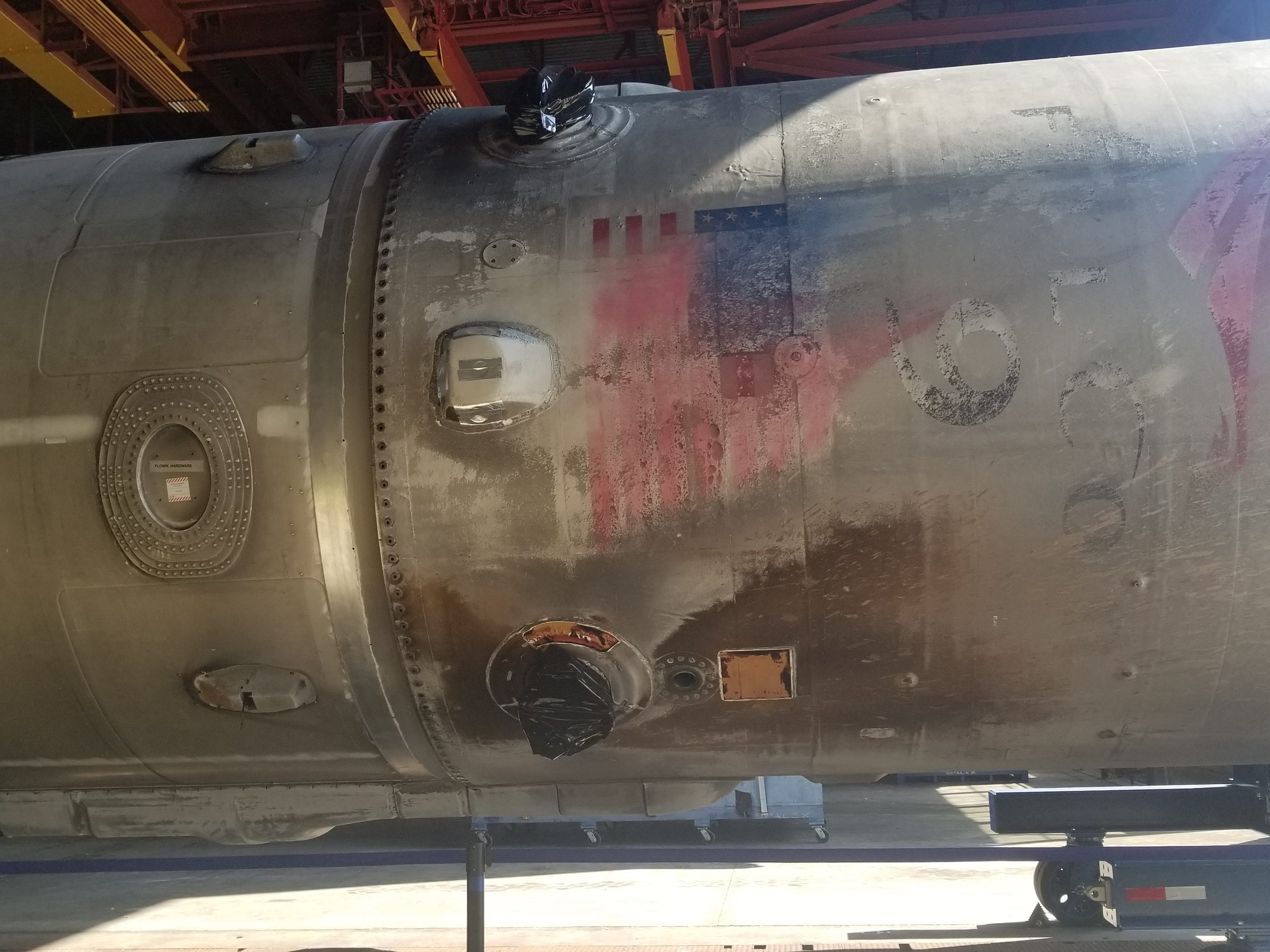
Most visitors to Florida’s Space Coast experience Cape Canaveral from a distance. They watch a rocket launch streak into the sky or tour the exhibits at Kennedy Space Center, imagining what happens behind the gates of one of America’s most important centers of innovation.
We were fortunate enough to get a rare behind-the-scenes look.
My husband was working at Cape Canaveral at the time, and during a special family day event we were invited inside to see areas that are normally closed to the public. Throughout the day, teams from different departments shared demonstrations, exhibits, and stories about the work being done at the Cape.
But what stayed with me most wasn’t the technology.
It was standing face-to-face with the rockets, boosters, and spacecraft that represent decades of human curiosity and determination. Looking up at them, it was impossible not to think about the engineers who designed them, the teams who launched them, and the astronauts who climbed aboard knowing they would leave Earth behind in pursuit of something greater.
- Seeing Space History Up Close
- The People Behind the Missions
- A Museum Few People Get to See
- Why the Experience Meant So Much
Seeing Space History Up Close
As we made our way around the facilities, we found ourselves standing beneath rockets and boosters that had once been part of America’s journey into space. It is one thing to see these machines in photographs or watch a launch on television. It is something entirely different to stand beside them and truly grasp their size.
Looking up at them, I was struck by how enormous they were. Every panel, every bolt, every piece of equipment represented countless hours of planning, testing, and problem-solving. These weren’t simply machines. They were the physical result of human curiosity and determination.

What amazed me most was how these towering rockets had carried people beyond the limits of what had once seemed possible. They had traveled farther than most of us will ever go, yet here they stood as reminders of what can happen when people refuse to accept that something cannot be done.
Standing among them, I found myself thinking about all the moments they represented—the launches watched around the world, the discoveries made in space, and the generations of children who looked up at the night sky and decided they wanted to be part of something bigger.


The People Behind the Missions
While the rockets naturally draw most of the attention, what stayed with me throughout the day was thinking about the people behind them.
Space exploration is often remembered through the names of astronauts, but every launch represents the work of thousands of people. Engineers spend years designing and refining systems. Technicians carefully inspect equipment. Scientists analyze data and solve problems. Teams in mission control monitor every detail, ready to respond in an instant when something doesn’t go according to plan.
The farther I walked through the exhibits and displays, the more I realized that space exploration is one of humanity’s greatest examples of collaboration. No single person reaches the stars alone.

I thought about the courage of the astronauts who climbed aboard these spacecraft, knowing there were risks every time they left Earth. But I also thought about the people standing on the ground—the families who watched them go, the teams who supported them, and the countless individuals whose names will never appear in a history book even though their contributions helped make those missions possible.
Perhaps that is what impressed me most about Cape Canaveral. It is easy to look at a rocket and see a machine. It is harder, but far more meaningful, to see the thousands of dreams, ideas, failures, successes, and years of dedication that made it possible for that rocket to ever leave the ground.
The space program is ultimately a story about people. Curious people. Courageous people. People willing to attempt something difficult simply because they believed it was worth doing.


A Museum Few People Get to See
One of the highlights of the day was visiting a museum that few people ever get the opportunity to see. Inside were displays honoring the history of the space program and the people who made it possible. Mission patches, photographs, artifacts, and tributes filled the rooms, telling the story of how far we have come since those earliest days of exploration.
As I walked through the exhibits, I realized that the space program is about so much more than rockets.

It has inspired generations of people to dream bigger than they thought possible. It pushed technology forward in ways that continue to shape our daily lives. It sparked curiosity, innovation, and a belief that impossible things might actually be achievable.
Many moments from the space program have become more than history. They have become part of our shared culture. The images of astronauts walking on the moon, rockets rising into the sky, and mission control celebrating success are instantly recognizable symbols of human achievement. Standing there surrounded by that history, it was impossible not to feel inspired by everything that had been accomplished and excited about what might still be ahead.


Why the Experience Meant So Much
While I wasn’t alive when humans first walked on the moon, I grew up hearing stories about it.
My parents and grandparents talked about gathering around the television to watch the launch and later the moon landing itself. They described it as one of those rare moments when the whole world seemed to stop. People held their breath, said a prayer, and watched together as astronauts left Earth and attempted something no one had ever done before.
Standing at Cape Canaveral, those stories suddenly felt much more real.
This was where history had happened. This was where rockets had launched carrying the hopes, fears, and dreams of millions of people. It was humbling to think about all the moments that had begun right here.


The experience also felt personal for another reason. Our family had recently moved across the country and was still finding our footing in a new place and a new chapter of life. It had been a season filled with change, uncertainty, and new beginnings. Seeing my husband become part of the work being done at the Cape made the experience even more meaningful.
As I looked around, I felt both gratitude and pride. Gratitude for the opportunity to witness this place up close, and pride in knowing that our family’s story had become connected, in some small way, to a place that has inspired generations of dreamers.

Space exploration has always been about more than rockets. It is about curiosity, innovation, and the willingness to attempt something that has never been done before. Standing at Cape Canaveral reminded me that some of humanity’s greatest achievements began with people who simply believed there was more to discover.
What I will remember most from the day is not any single rocket or exhibit. It is the feeling of standing in a place where people have spent decades turning impossible ideas into reality.
Space exploration asks humanity to look beyond what is known and imagine what might be possible. Walking through Cape Canaveral reminded me that every great achievement begins with someone willing to dream a little bigger than everyone else.
As we left and headed home, I found myself thinking less about where the space program had been and more about where it might go next. If the first decades of exploration taught us anything, it is that the next chapter will likely be just as remarkable as the last.
If you are interested in seeing more of about the Space program, then you may be interested in these:
Thanks for coming along on this behind the scenes visit to Cape Canaveral. May you dream far beyond the earth and shoot for the moon.

Coming Up Next:
For More Information:
Read More From:
Follow along for more adventures near and far!


Leave a Reply